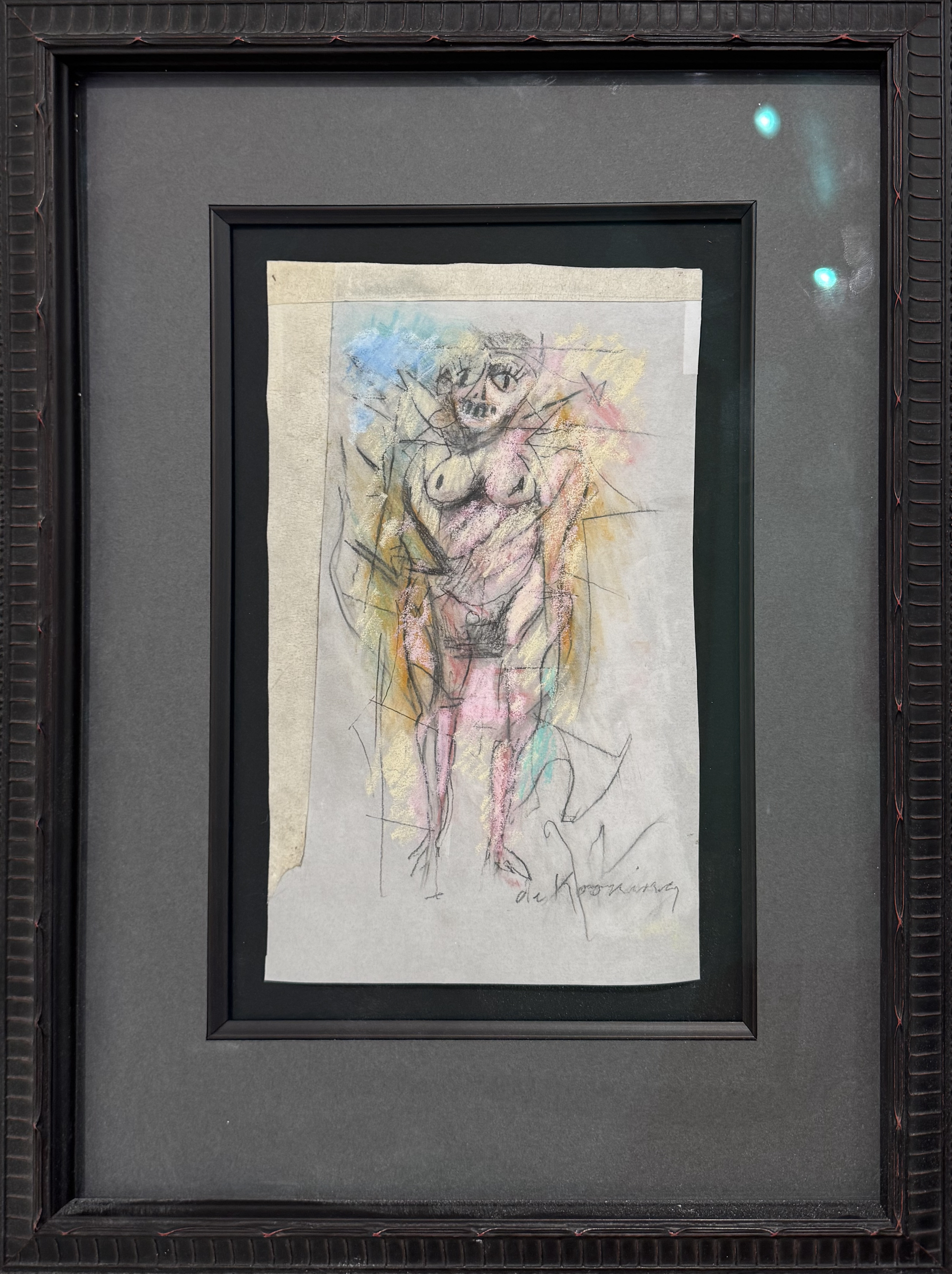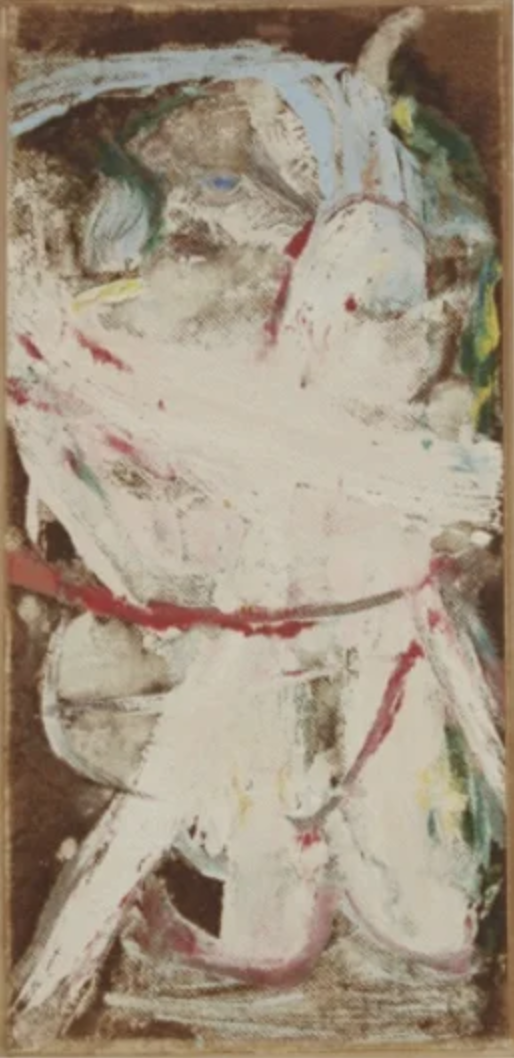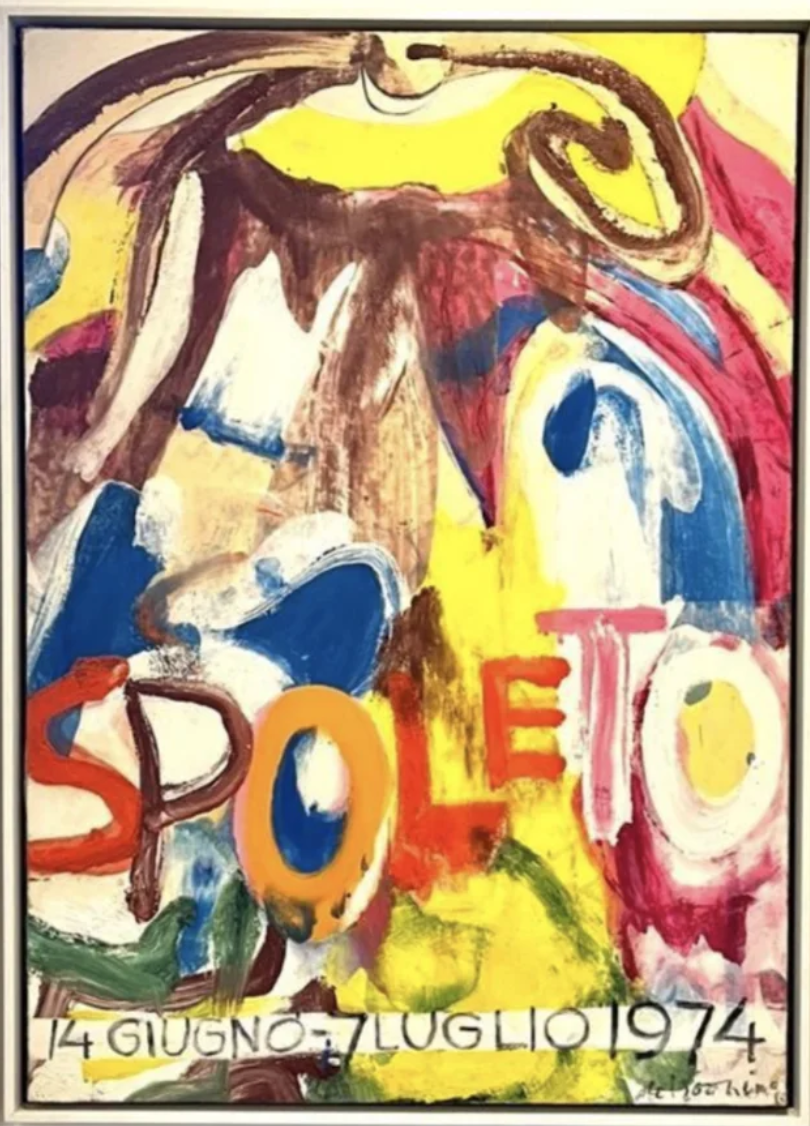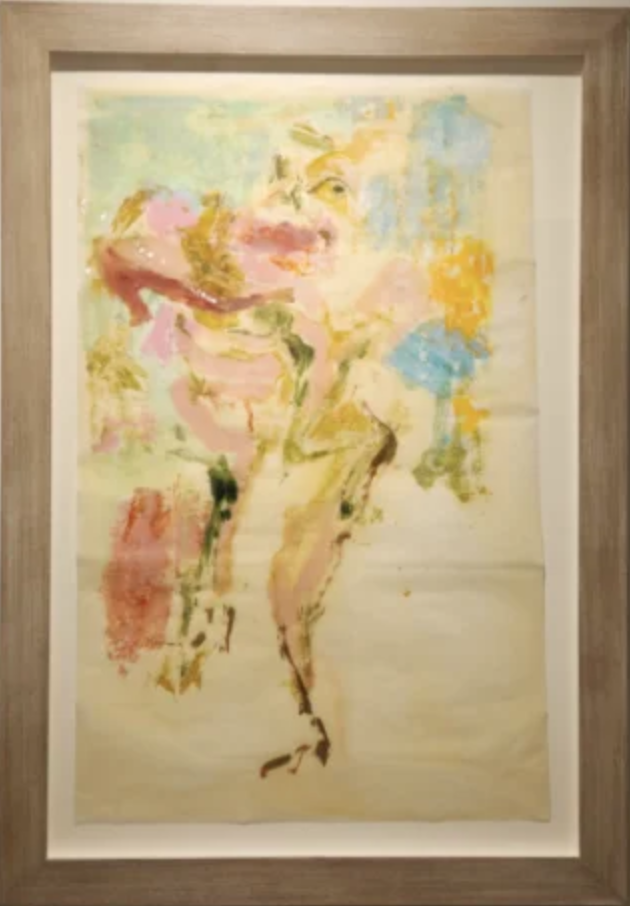

Created during Willem de Kooning’s luminous late period, this work reflects the dramatic shift that occurred in his painting during the 1970s, when the dense aggression of the earlier Woman paintings gave way to something more open, atmospheric, and fluid. Here, the figure barely holds together. Limbs, torso, landscape, and gesture dissolve into sweeping passages of pink, yellow, blue, and green, creating a composition that feels simultaneously sensual, unstable, and airborne.
These late works remain among the most debated and psychologically charged in de Kooning’s oeuvre. Some critics viewed the increasing openness of the paintings as liberation; others saw fragility beneath their lightness. What makes this work especially compelling is the tension between those readings. The body is still present, but transformed into movement, memory, and pure painterly rhythm. The work marks the evolution of Abstract Expressionism beyond postwar existential heaviness into something more vulnerable and uncertain—where identity, form, and even consciousness itself appear to drift in and out of focus.
After moving from Manhattan, NYC, the de Koonings lived and worked in the Hamptons creating their seminal works and pioneering the East End artist colony.

Thank you! Your submission has been received!
Oops! Something went wrong while submitting the form.