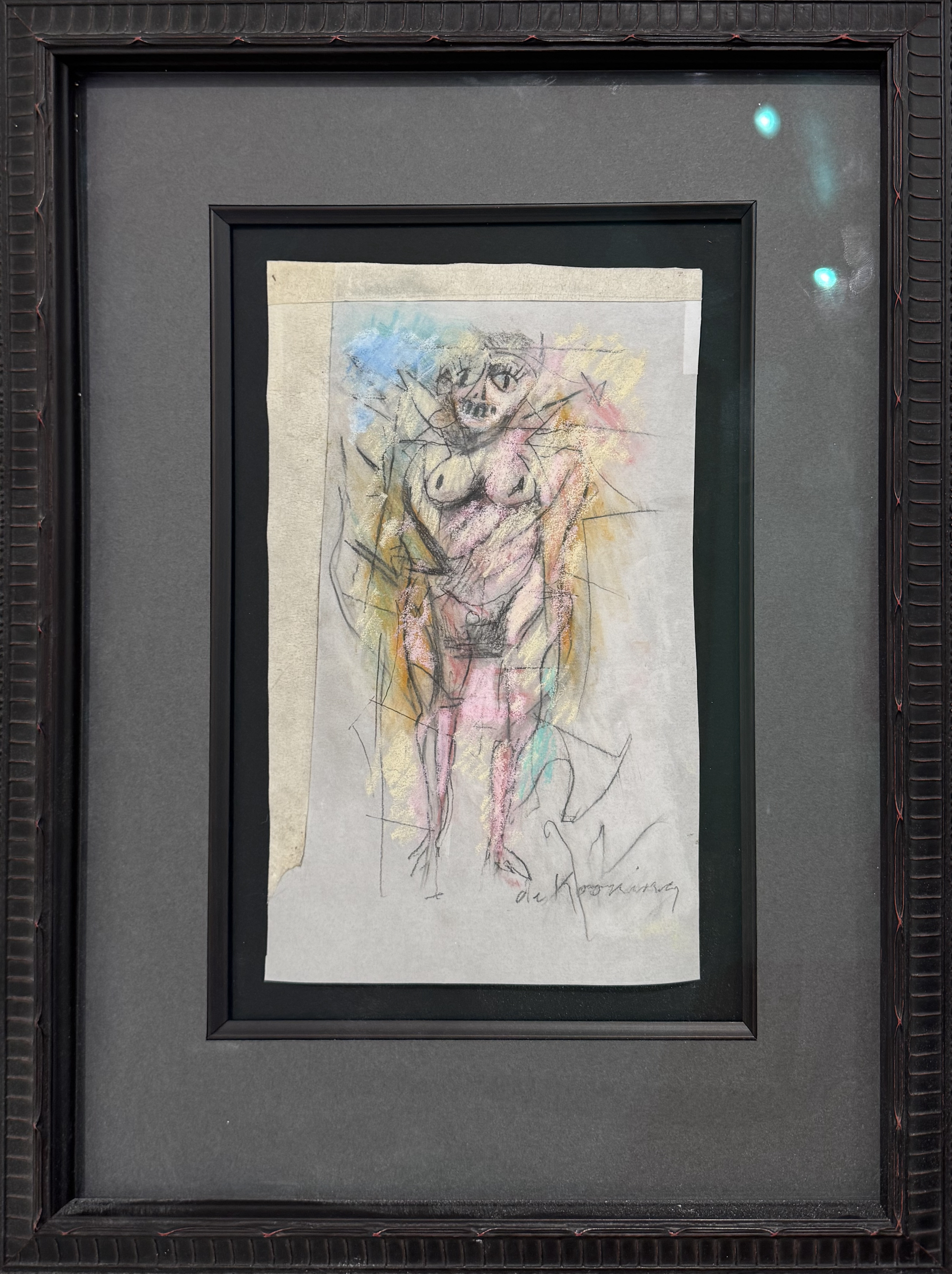
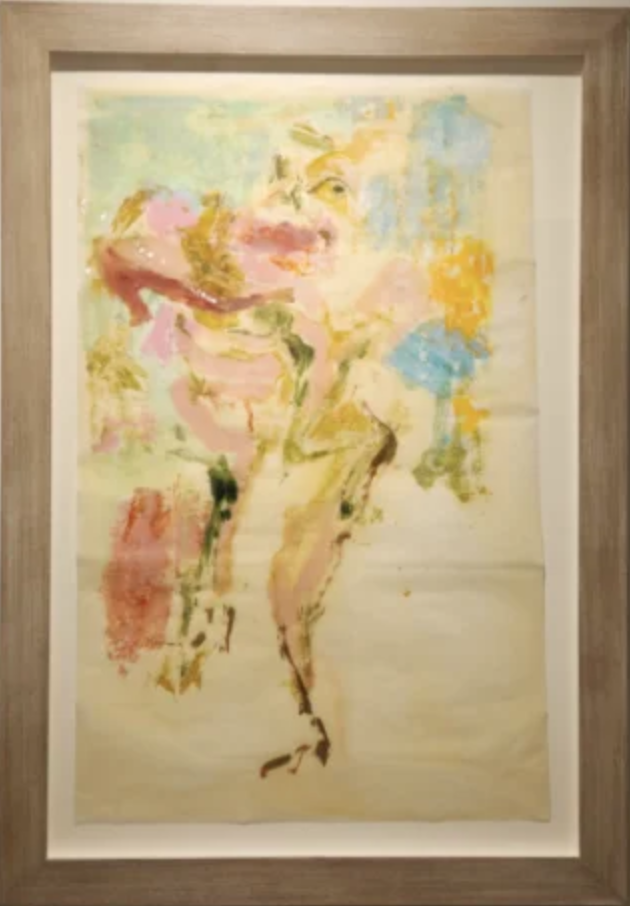
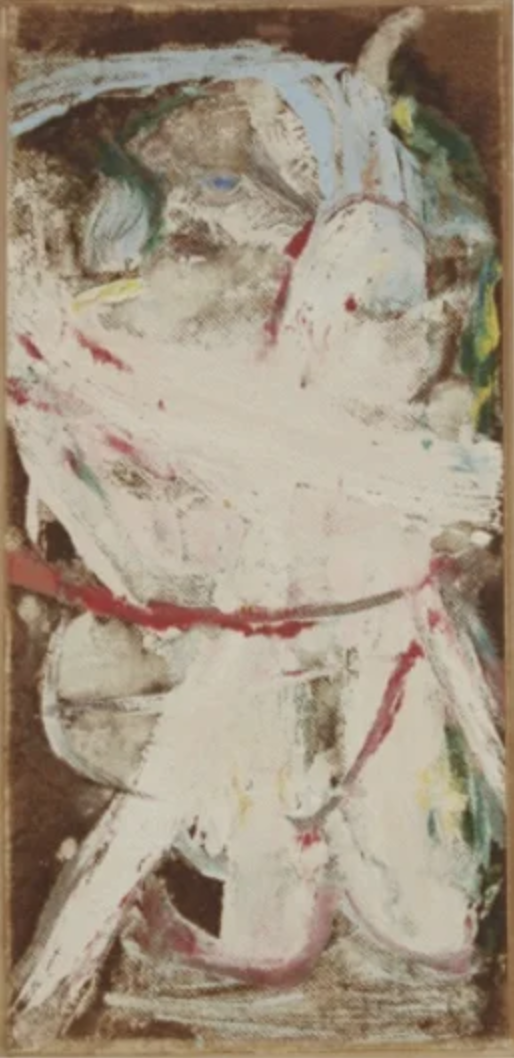
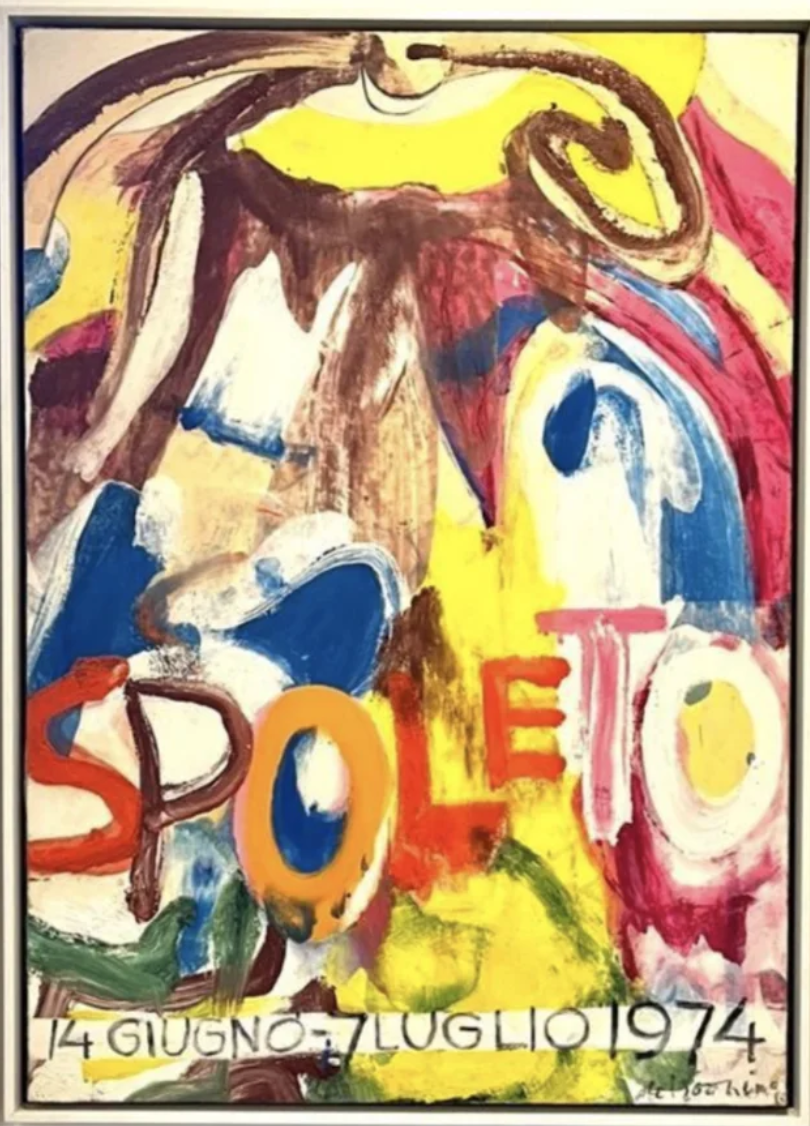
Created during a pivotal transitional period in Willem de Kooning’s career, Paging Woman revisits the explosive energy of his earlier Woman paintings while pushing the figure toward fragmentation, atmosphere, and near-disappearance. Painted on mounted newsprint rather than traditional canvas, the work carries an unusual immediacy and instability—as though the image is still forming and dissolving at the same time. Swaths of pink, cream, yellow, and red collide with scraped passages and raw gesture, leaving traces of the body without ever fully resolving into one.
By 1964, de Kooning had moved beyond the brutal confrontations of the 1950s Woman series into a more fluid and open visual language. Yet the tension between abstraction and figuration remained central to his practice. The use of newsprint is especially significant here: ephemeral, disposable, and urban, it introduces a temporary quality that mirrors the instability of modern identity itself. In The Lost Generation, Paging Woman becomes a bridge between postwar existential painting and the fractured visual culture that contemporary abstraction would later inherit—where images erode and refuse permanence.
Willem and Elaine de Kooning (with the Pollocks) help to shape the mythology of the Hampton’s artist community.

Thank you! Your submission has been received!
Oops! Something went wrong while submitting the form.