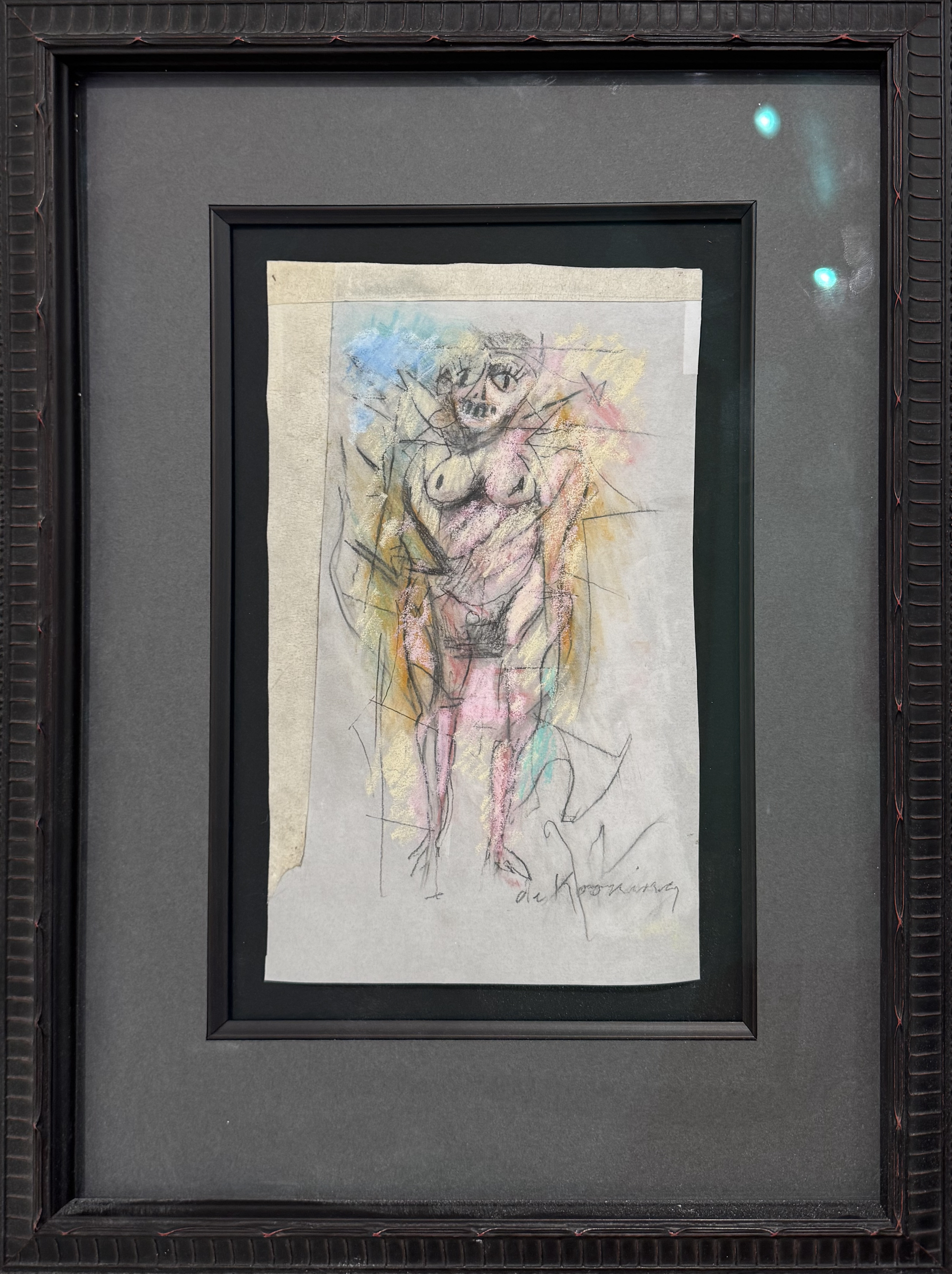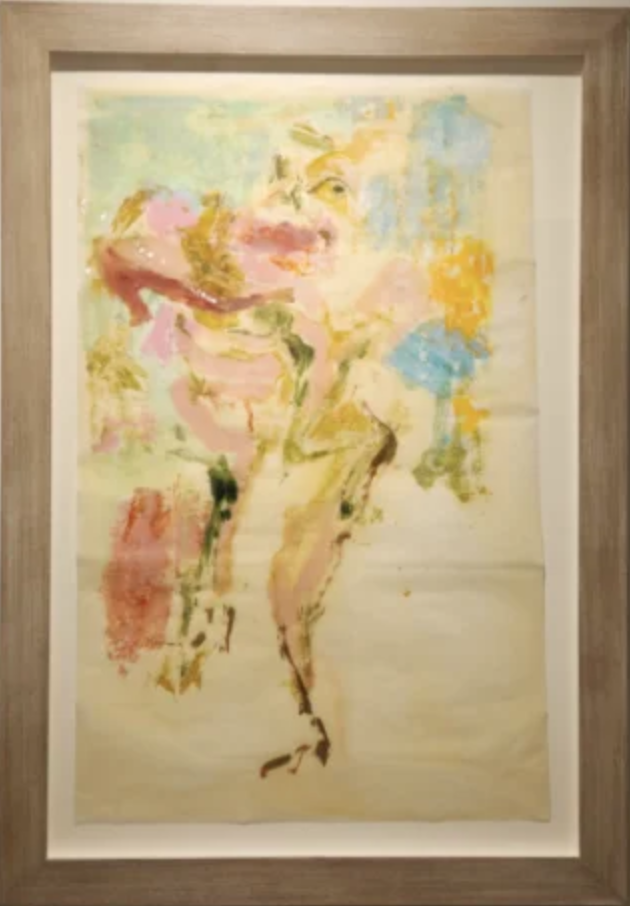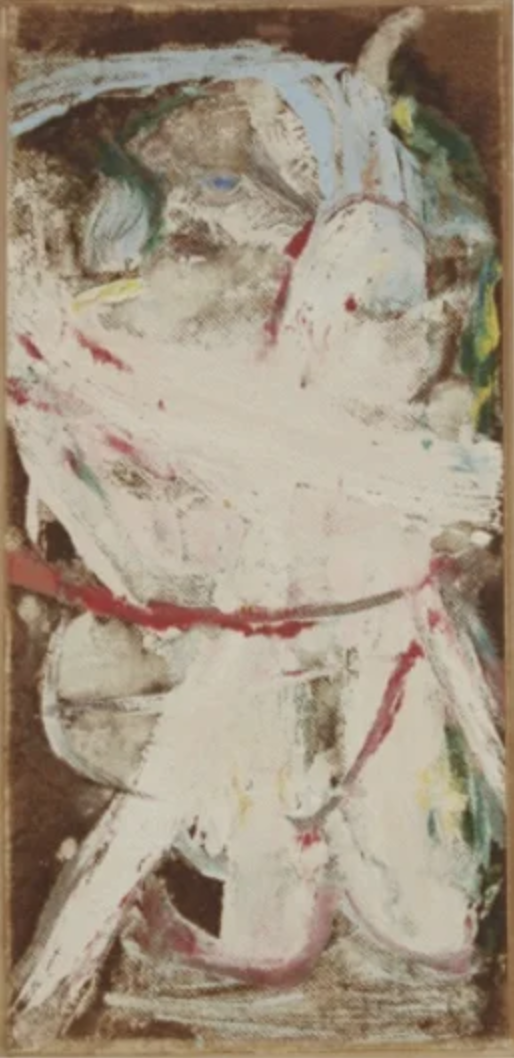

By 1966, Willem de Kooning’s Woman paintings had evolved from the violent confrontations of the 1950s into something more fluid, spectral, and psychologically elusive. In Kneeling Woman, the figure appears suspended between presence and disappearance—part body, part gesture, part atmosphere. Limbs dissolve into sweeping strokes of white, pink, and red, while the surface feels simultaneously sensual and unstable, as though the image is being formed and erased in the same moment.
The vertical composition intensifies the physicality of the figure, yet de Kooning refuses traditional structure or anatomy. Instead, the body becomes movement itself: scraped, smeared, and continuously revised. This tension between figuration and abstraction remained central to de Kooning’s oeuvre and helped redefine postwar painting. Unlike the heroic certainty often associated with early Abstract Expressionism, works from this period embrace instability, fragmentation, and ambiguity. Kneeling Woman reflects a larger cultural shift in the 1960s—when identity, gender, and the human figure itself became increasingly fractured within modern visual culture.

Thank you! Your submission has been received!
Oops! Something went wrong while submitting the form.