
.jpeg)

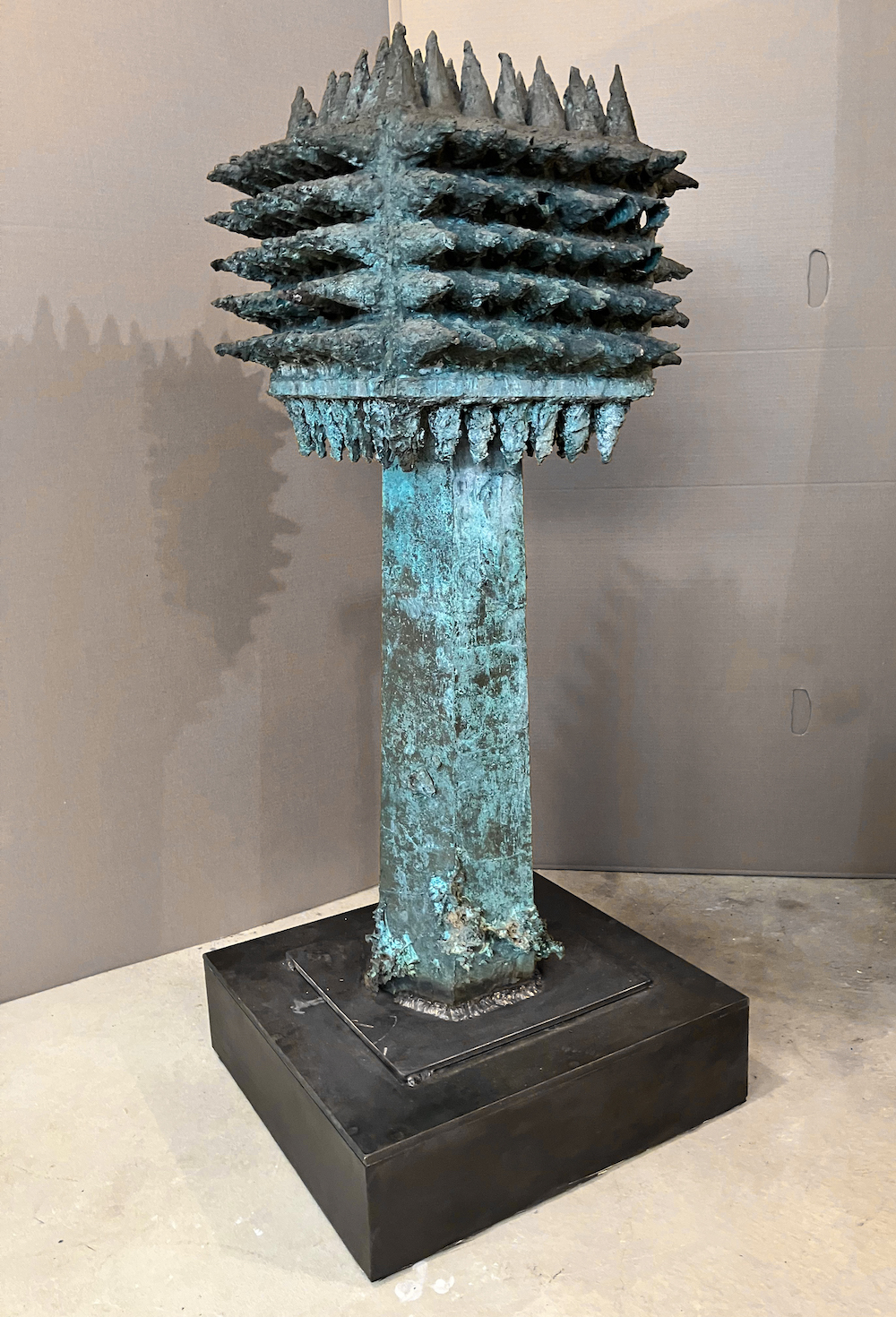
With Morningside Heights, William Tarr transforms sculpture into an architectural excavation of modern urban life. Built fromlayered geometric forms embedded with letters, symbols, and fragmented relief elements, the work resembles a collapsing cityblock, archaeological ruin, or coded language system suspended between construction and decay. The surface feels ancient andindustrial, carrying the weight of postwar modernism while anticipating the fractured visual density of contemporary cities.
Created in 1964, the work reflects a pivotal moment when postwar artists were expanding abstraction beyond painting andinto immersive spatial structures. While Tarr is less widely canonized than many of his New York School contemporaries,Morningside Heights shares the physical ambition and emotional intensity of artists such as Louise Nevelson and the broaderpostwar sculptural movement. The embedded symbols and modular forms also suggest an emerging dialogue betweenabstraction, communication, and urban infrastructure during the rise of information culture in mid-century America.
Morningside Heights represents how the language of postwar abstraction expanded into architecture, environment, and codedsystems, bridging the physical energy of Abstract Expressionism with the increasingly fragmented structures of contemporarylife.
William Tarr was a longtime Springs resident and studio artist from 1976–1997
.jpeg)
.jpeg)
.jpeg)

