
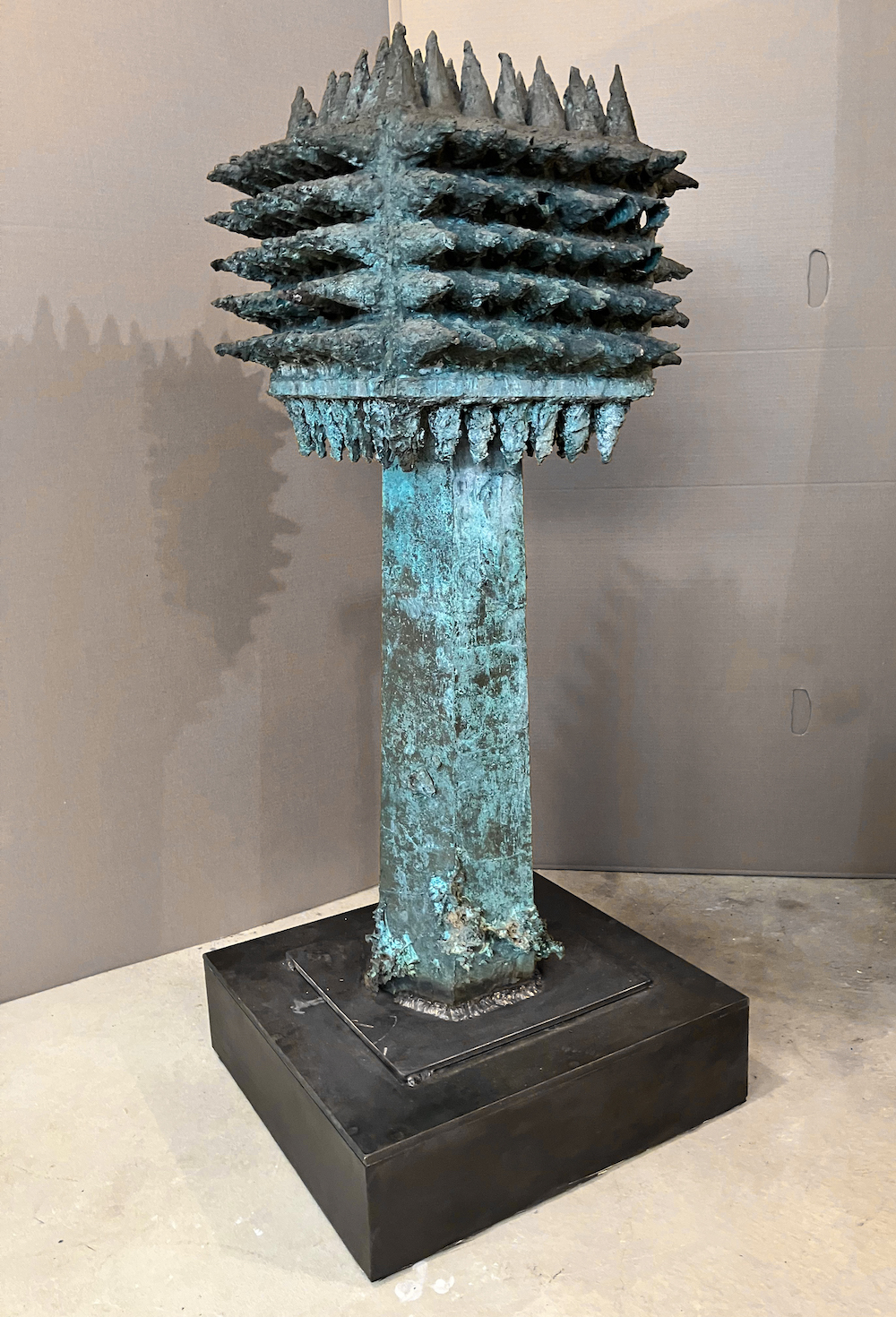

With Bronze Points, William Tarr transforms sculpture into something architectural, biological, and confrontational. Risingfrom a monolithic vertical column, the densely spiked geometric form appears part machine, part ritual object, part futuristicmonument. The repeated bronze projections create a powerful tension between order and aggression, while the oxidized surfacegives the work the feeling of an unearthed artifact from an imagined civilization.
Created in 1965, the sculpture reflects a pivotal moment when postwar artists were pushing abstraction beyond painting andinto environmental and sculptural form. While connected to the physical ambition of the New York School, Tarr’s work alsoanticipates later movements including Minimalism, Brutalism, and postindustrial sculpture. The work’s modular repetitionand architectural density place it in dialogue with the spatial concerns of Louise Nevelson and the structural experimentationemerging in mid-century American sculpture.
Bronze Points feels protective and threatening at once — totemic, defensive, even militaristic — reflecting the technologicalanxieties and cultural tensions of the Cold War era. In The Lost Generation, the work represents abstraction hardening intostructure, objecthood, and monument, where postwar emotional intensity becomes encoded into material and form itself.
William Tarr lived and worked in Springs, Easthampton, from 1976–1997.
.jpeg)
.jpeg)
.jpeg)
.jpeg)

