
.jpeg)

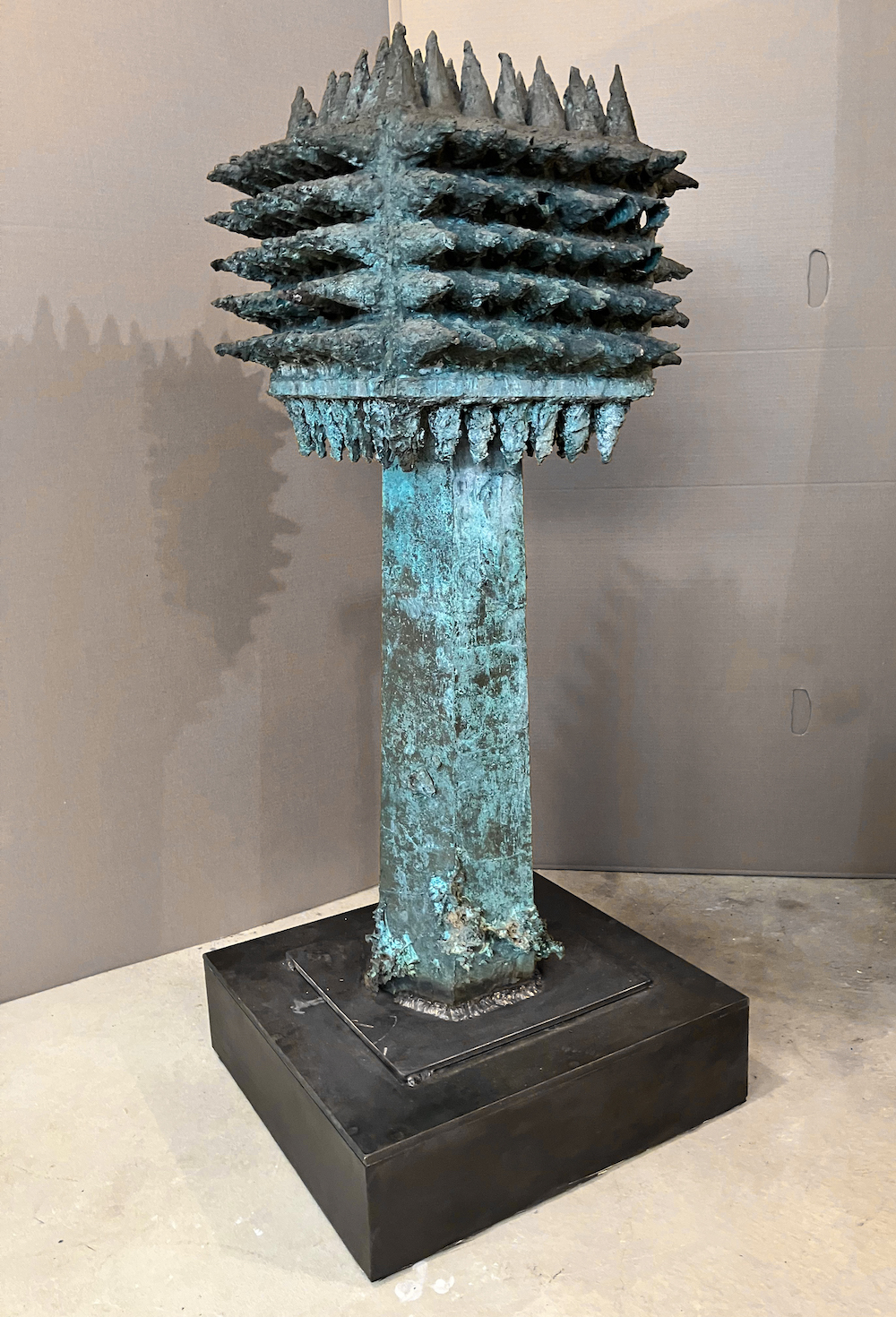
With KAPPA, William Tarr reduces sculpture to a sharp, coded language of balance, tension, and vertical movement. Built frominterlocking angular bronze forms, the work feels architectural, calligraphic, and totemic—part Constructivist structure, partabstract figure, part symbolic glyph. Despite its relatively intimate scale, the sculpture carries a strong physical presence, withprojecting elements that create shifting rhythms of compression, suspension, and implied motion.
Created in 1968, KAPPA reflects a period when postwar sculpture was moving away from traditional monumentality towardincreasingly reductive and conceptual forms. While Tarr shared the broader modernist ambition of the New York Schoolgeneration, this work also enters into dialogue with Minimalism, Japanese calligraphic structure, and mid-century architecturaldesign. The sculpture’s severe geometry contrasts sharply with the gestural emotionalism associated with Abstract Expressionistpainting, yet it retains a similar concern with energy, movement, and psychological force.
KAPPA’s precision feels fragile and engineered, balanced between elegance and instability. In The Lost Generation, the workrepresents abstraction distilled to its skeletal essence—where gesture no longer explodes across the canvas, but hardens intostructure, symbol, and spatial tension.
Tarr moved to Springs, East Hampton in the mid-1970s after summering there for several years.
.jpeg)
.jpeg)
.jpeg)

