Robert Rauschenberg (1925–2008) was an American artist whose experimental approach to materials and form helped redefine the boundaries between painting, sculpture, and everyday life. A pivotal figure in postwar art, Rauschenberg’s practice bridged Abstract Expressionism and Pop Art, incorporating found objects, collage, and nontraditional materials into complex assemblages he called Combines. Through this inventive fusion, he sought to capture the pulse of contemporary life—its energy, contradictions, and interconnected systems.A lifelong environmentalist, Rauschenberg also used his art to advocate for ecological awareness and social responsibility. In 1970, he created Earth Day, a collage poster that became an enduring emblem of the modern environmental movement. Commissioned to promote the first Earth Day—a national event launched after the devastating 1969 California oil spill—the work juxtaposed imagery of pollution, deforestation, and industrialization with a powerful image of the bald eagle, a species then on the brink of extinction. Rauschenberg’s commitment to the cause continued with later Earth Day posters (1990) and a major environmental piece for the 1991 United Nations Earth Summit.
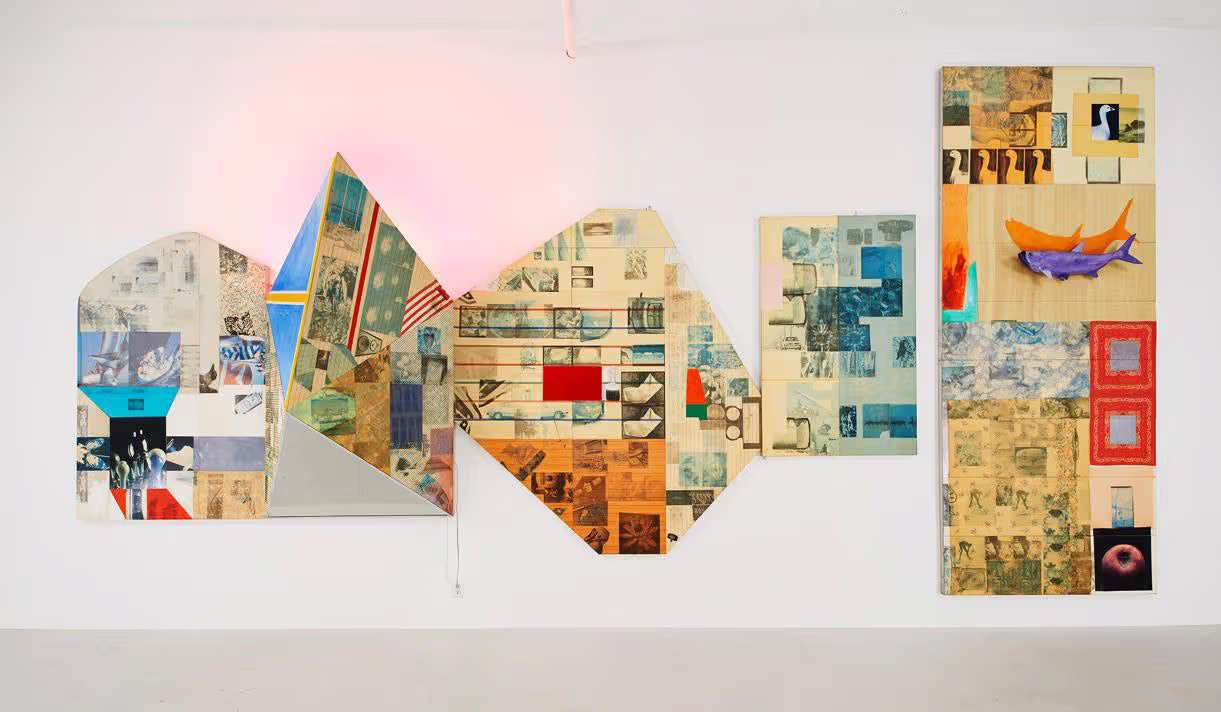
Periwinkle Shaft (1979–80), a monumental work commissioned by the Arts in Public Places Program of the National Endowment for the Arts for the Children’s Hospital Medical Center in Washington, D.C., extends Rauschenberg’s dialogue between art, technology, and ecology. Composed of solvent transfers, layered fabrics, mirrored Plexiglas, and electric light, the five-panel installation embodies his belief that art could merge with the rhythms of daily life. The reflective and translucent surfaces invite viewers into an immersive experience that feels alive—animated by movement, light, and material transformation.

Rauschenberg’s works are held in the most prestigious collections worldwide, including the Museum of Modern Art (New York), Tate (London), Centre Pompidou (Paris), and the Los Angeles County Museum of Art. His pioneering legacy continues to influence generations of artists who engage with environmental, social, and material consciousness.


%20(1).jpg)


