

Yayoi Kusama (b. 1929, Matsumoto, Japan) is one of the most influential artists of the postwar era, whose practice spans painting, sculpture, installation, performance, and literature. Over the course of seven decades, she has built a singular visual language rooted in repetition, infinity, and the psychological tension between self and environment. Her work, deeply introspective yet universally resonant, transforms personal obsession into a meditation on the cosmic and the collective.
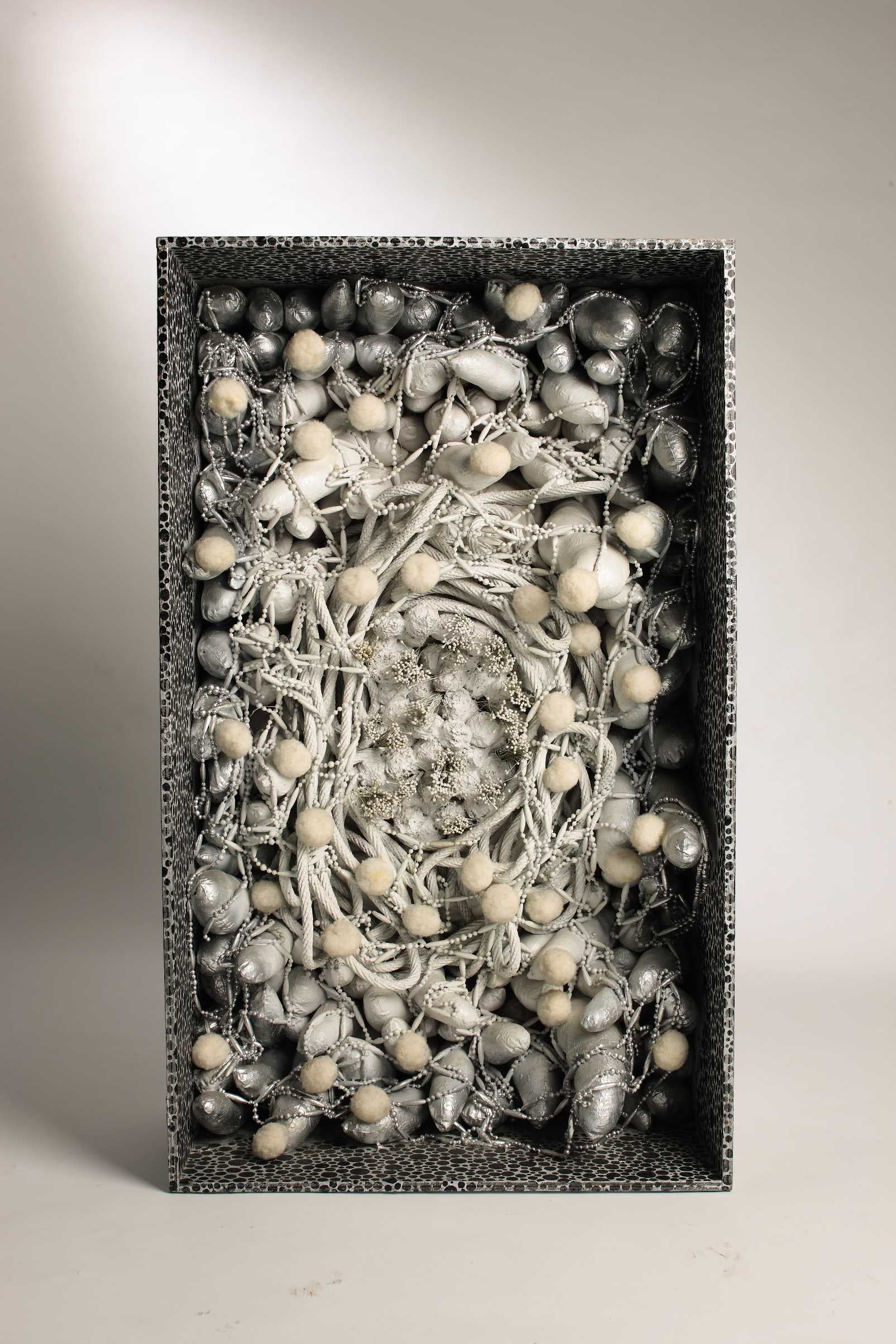
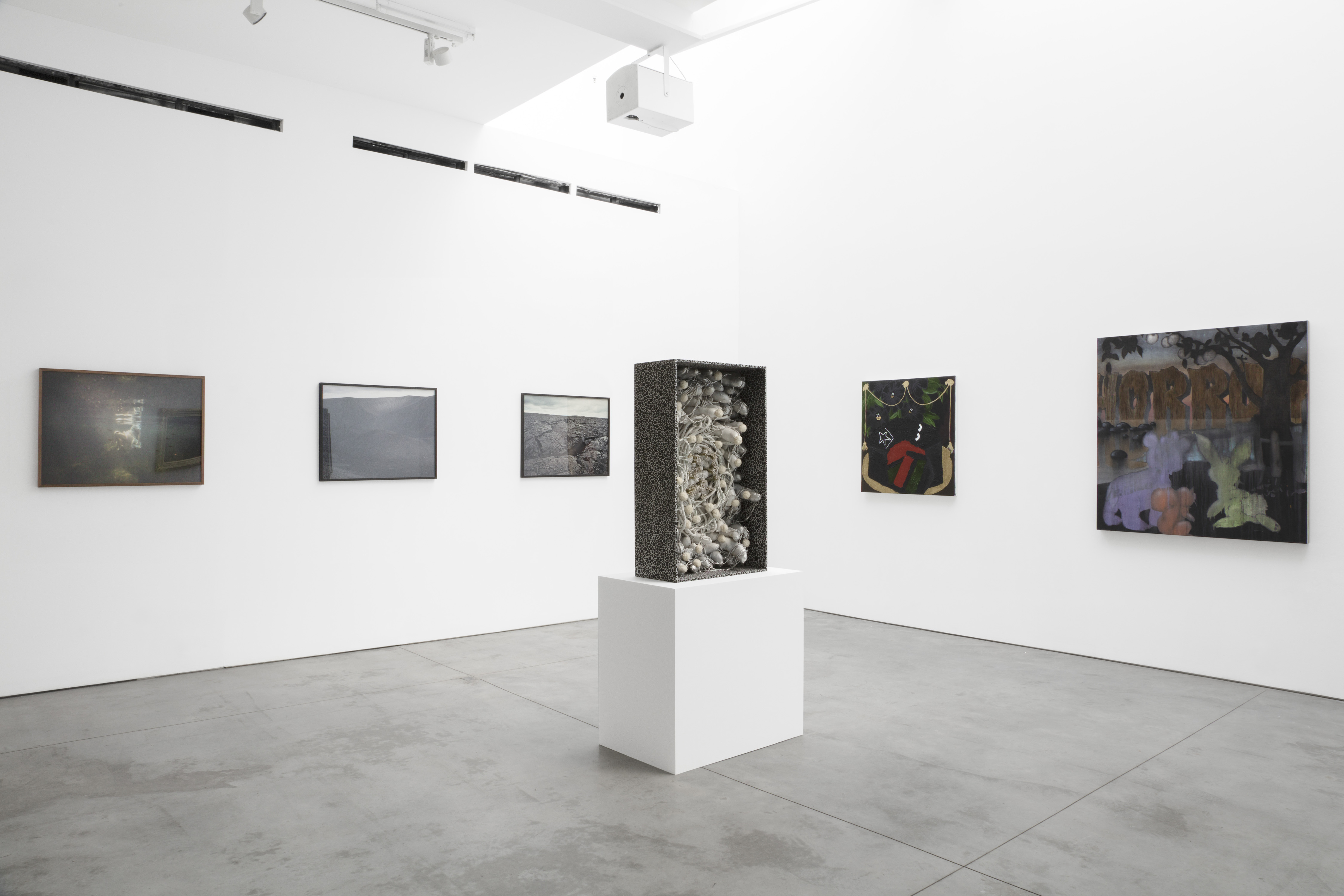
Increment in The Spring (1986) exemplifies Kusama’s enduring fascination with the natural world as a site of regeneration and transcendence. Constructed from acrylic, synthetic fiber, plastic, and stuffed fabric within a wooden box, the sculpture radiates the vitality and renewal associated with spring. Its floral forms burst outward in rhythmic repetition, evoking both organic growth and infinite expansion—hallmarks of Kusama’s vision.
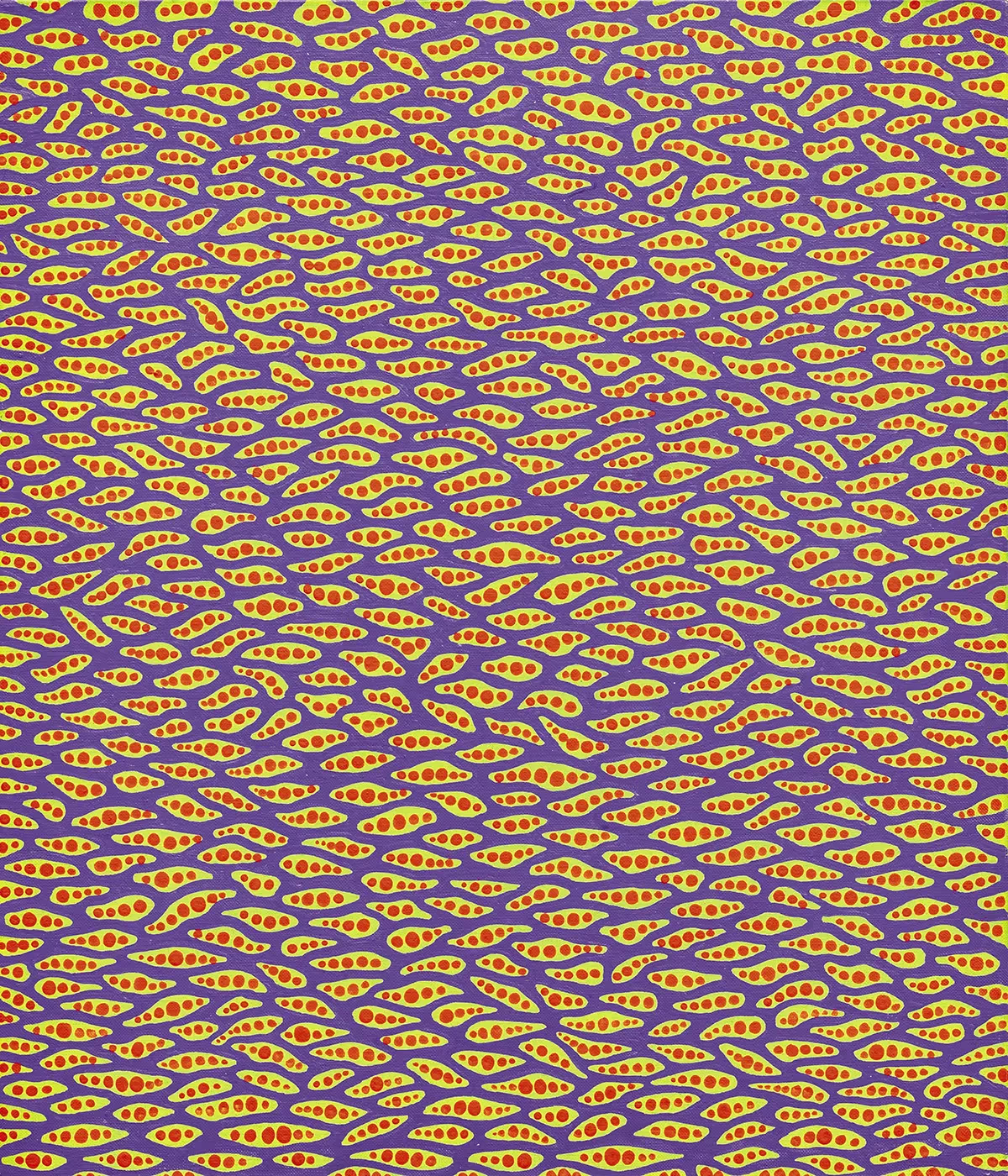
Polka dots, a central motif in her practice, cover the work’s surface as symbols of unity and boundlessness. “Polka dots can’t stay alone,” Kusama has said. “When we obliterate nature and our bodies with polka dots, we become part of the unity of our environments.” In Increment in The Spring, each dot serves as both cell and star, collapsing the distance between microcosm and cosmos. The work celebrates the interconnectedness of all life and the artist’s lifelong pursuit of spiritual oneness through art.
Kusama’s influence extends across generations and movements—from Minimalism and Pop Art to contemporary installation practices. Her immersive Infinity Mirror Rooms, pumpkin sculptures, and polka-dotted environments have made her one of the most recognizable and beloved figures in global contemporary art. Her works are housed in major public collections, including the Museum of Modern Art, New York; Tate Modern, London; Centre Pompidou, Paris; and the Hirshhorn Museum and Sculpture Garden, Washington, D.C.