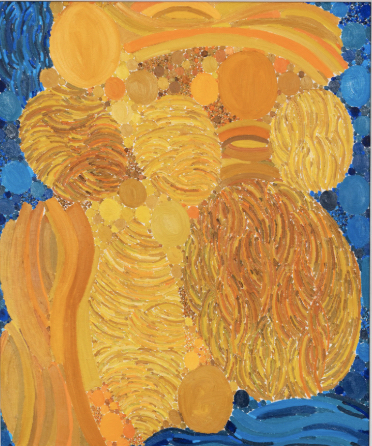

Lynne Drexler occupied a unique position within the second generation of Abstract Expressionism, merging the gestural freedom of the New York School with an intensely personal relationship to color, rhythm, and nature. Long overshadowed by her contemporaries and by the male-dominated mythology surrounding postwar abstraction, Drexler’s work has undergone a major institutional and market reevaluation in recent years.
Painted in 1972, Yellow Monologue reflects the mature visual language that defined her practice: densely layered surfaces, vibrating color relationships, and forms that hover between abstraction and landscape. The painting’s radiant yellows and saturated blues evoke sunlight, water, floral patterns, and organic movement, revealing Drexler’s deep sensitivity to both music and the natural world.
Drexler spent significant time in the Hamptons artistic community before later relocating to Monhegan Island, Maine, and her work carries the meditative atmosphere associated with artists who sought distance from the increasingly commercialized New York art world.
Today, Drexler’s paintings are recognized not simply as rediscoveries, but as vital contributions to the broader history of postwar American abstraction.

Thank you! Your submission has been received!
Oops! Something went wrong while submitting the form.

