
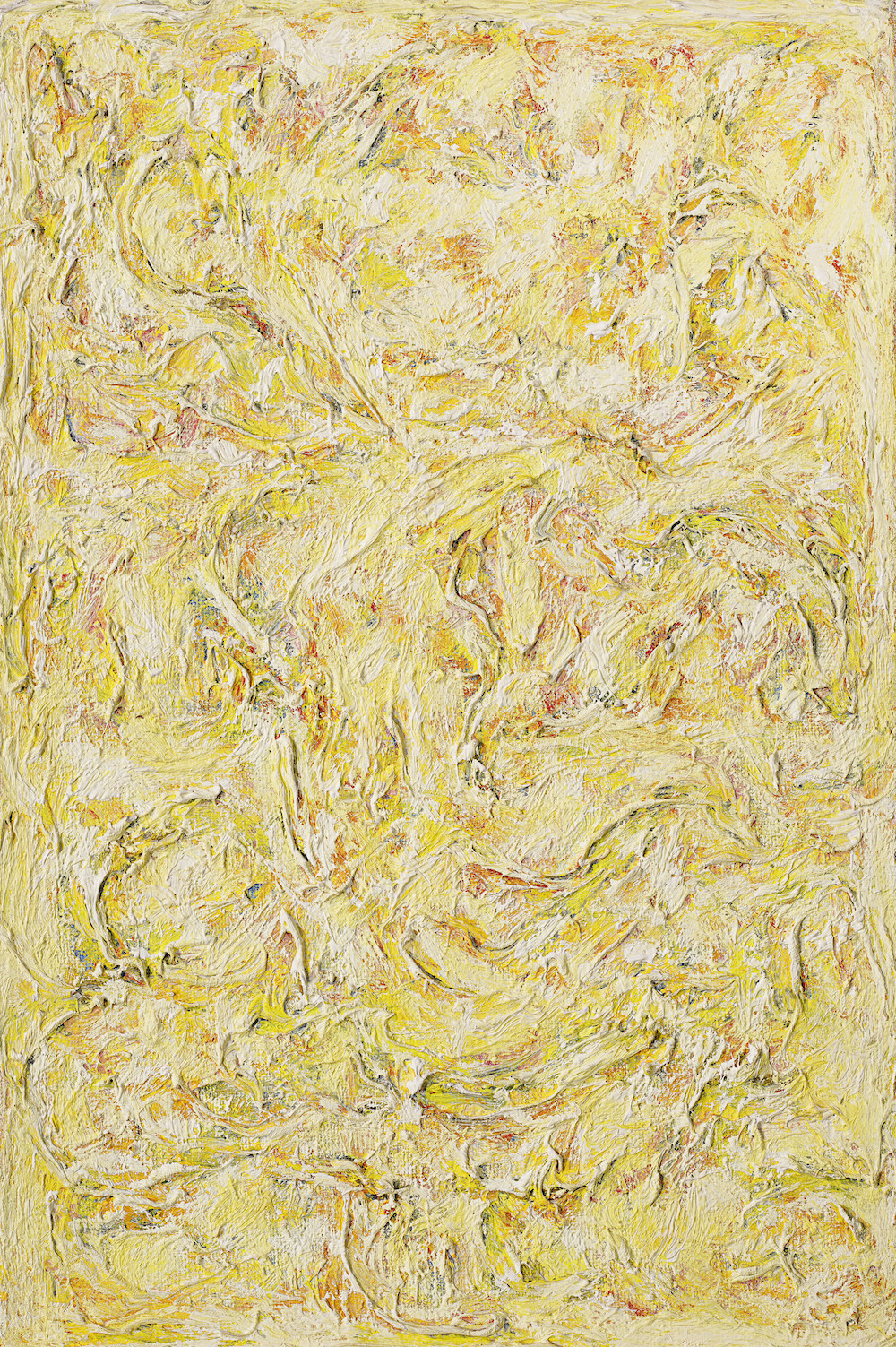

Painted in Paris during the final and most luminous phase of Beauford Delaney’s career, this work transforms abstraction intoatmosphere, vibration, and light itself. Unlike the aggressive physicality associated with many Abstract Expressionists, Delaney’spaintings dissolve structure into radiant fields of color and movement, creating compositions that feel spiritual rather thanconfrontational. Here, layered yellows and fractured gestures pulse across the canvas until figure, landscape, and space nearlydisappear into pure sensation.
Delaney occupies a singular position within the postwar canon. A Black American artist working between Harlem,Greenwich Village, and Paris, he moved through the same cultural orbit as the New York School while remaining historicallyunderrecognized for decades. This late work reflects his shift away from representation toward a deeply personal language ofabstraction influenced by jazz, modernism, memory, and light. Its intimate scale makes the painting feel almost devotional.Delaney expands the story of Abstract Expressionism beyond its dominant mythology, revealing a quieter but equally radicalvision of postwar abstraction—one rooted in perception, transcendence, and emotional survival.

