
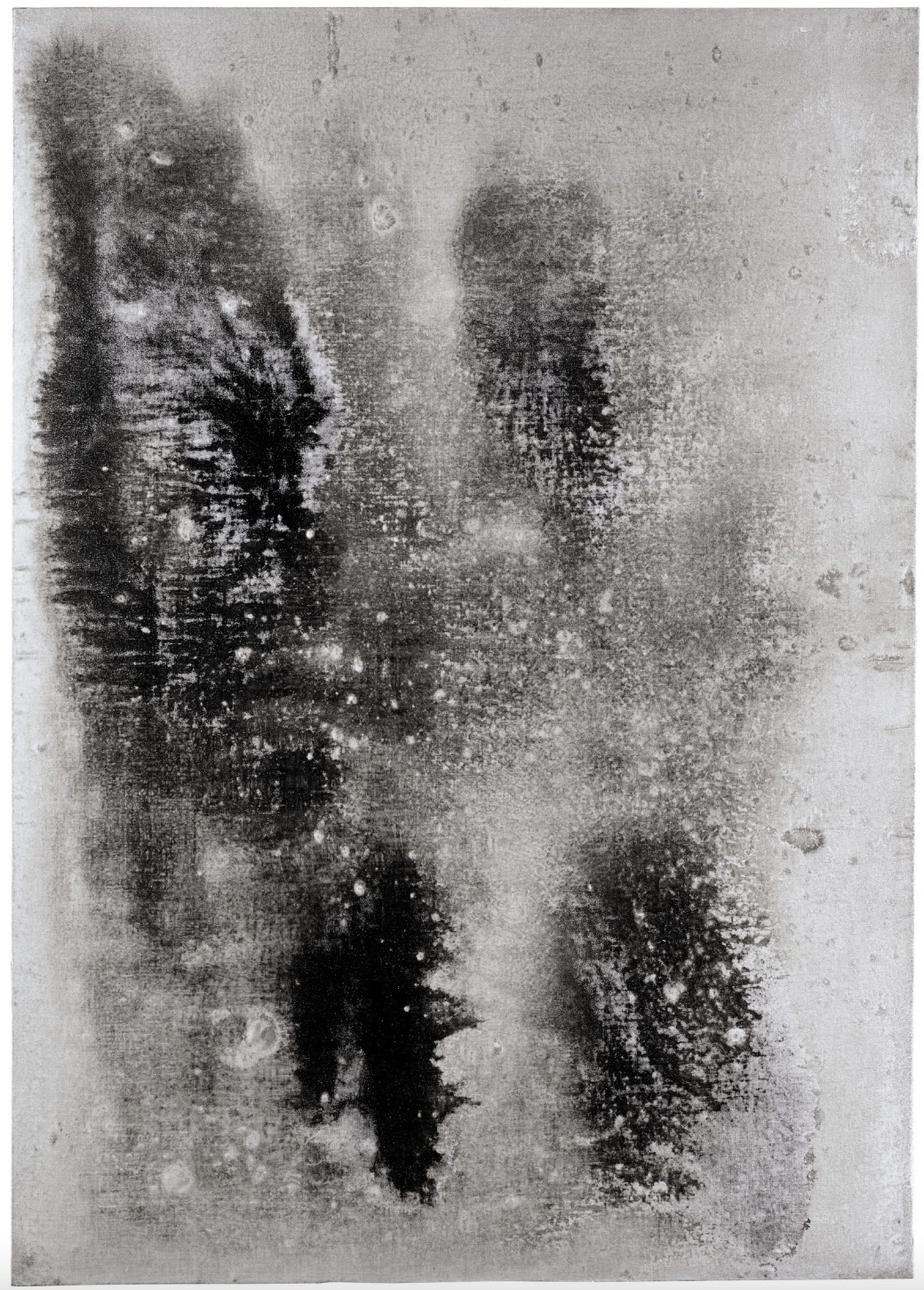

Painted in 1985, this early Christopher Wool work captures a critical moment when postwar abstraction began mutating intosomething colder, urban, and psychologically fragmented. Using enamel instead of traditional oil paint, Wool creates a surfacethat feels industrial, damaged, and almost mechanical—closer to walls, smoke, asphalt, and erased graffiti than to the heroicbrushwork of classic Abstract Expressionism. Black forms emerge and dissolve against a bleached ground, hovering betweengesture and disappearance.
The painting is significant within Wool’s oeuvre because it predates the text paintings that would later define his market andinstitutional identity, revealing instead his deeper engagement with the language of de Kooning, Franz Kline, and postwargestural abstraction. But where the New York School sought existential freedom through paint, Wool introduces erosion,repetition, and urban detachment. The emotional drama of Abstract Expressionism becomes muted, scraped down, andpsychologically compressed. The work acts as a contemporary echo of de Kooning’s dismantled surfaces—showing how theaggressive energy of postwar painting survives in altered form within the fractured visual culture of the late twentieth century.
Wool has long maintained a studio presence in Montauk/East Hampton and became part of the later downtown NY-to-EastEnd migration of contemporary artists.

