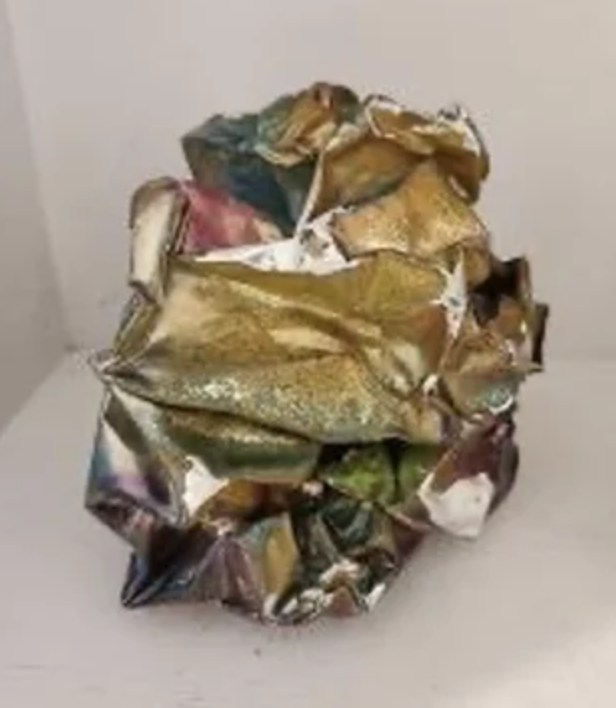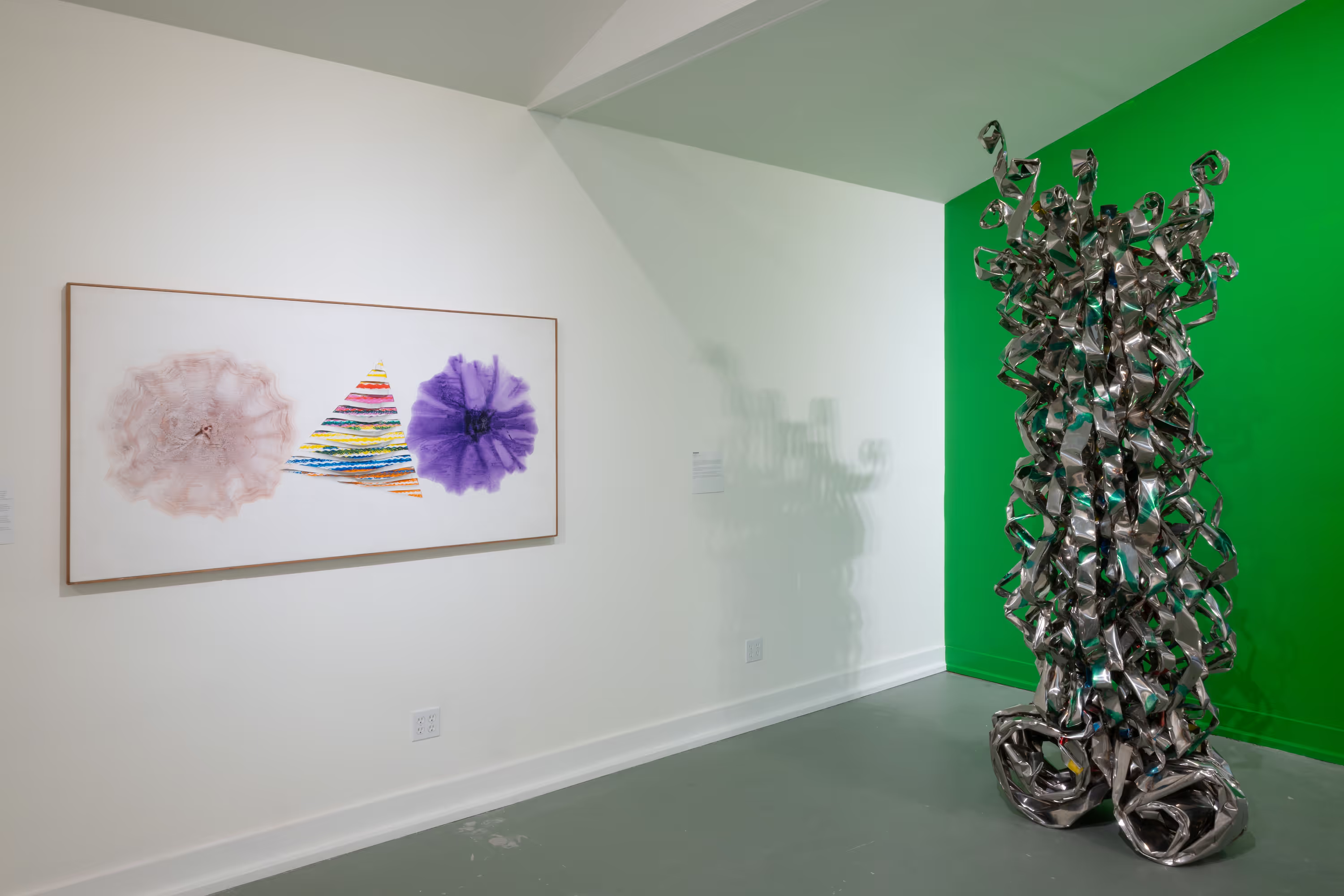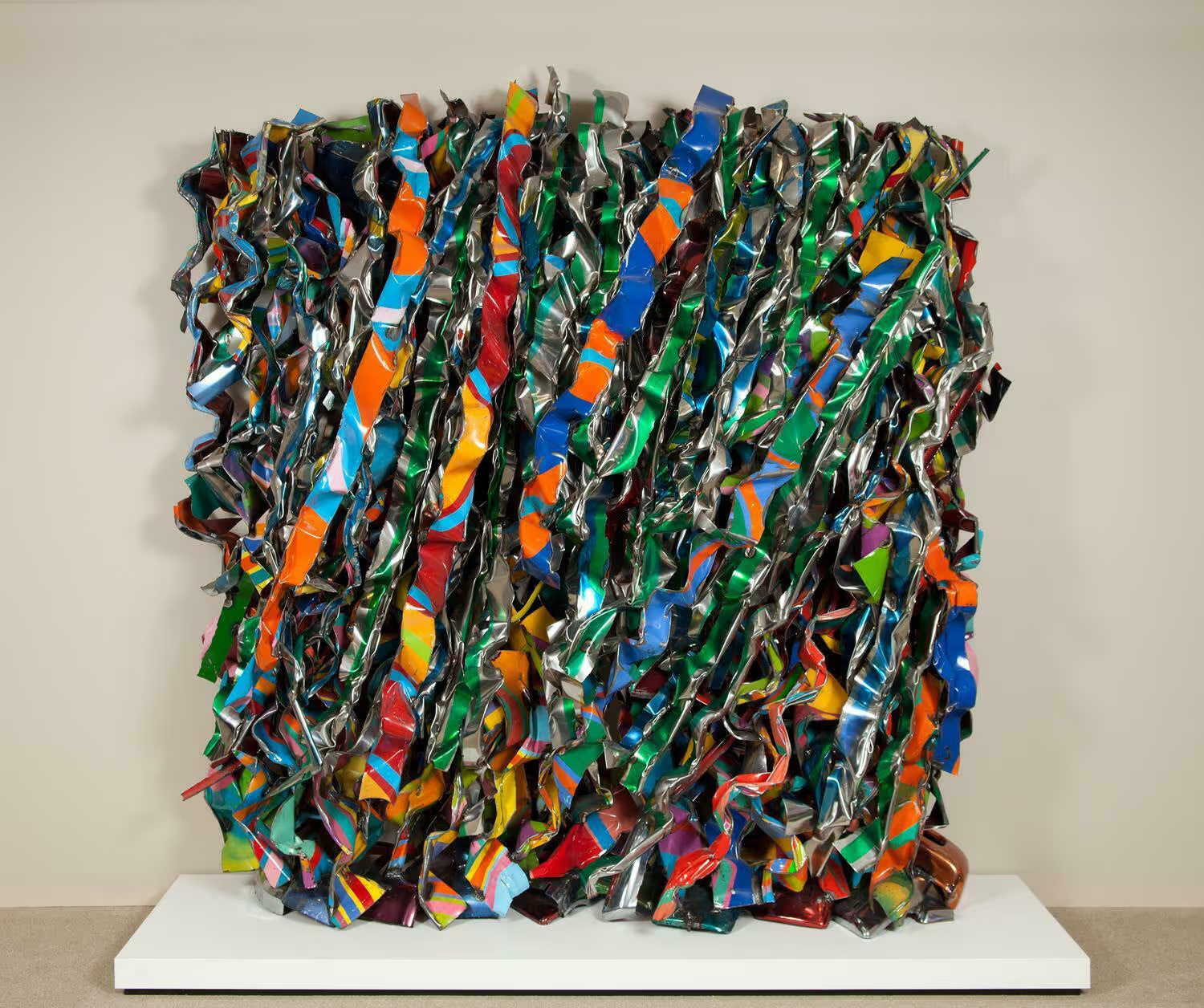

Using crushed automobile steel as his primary material, John Chamberlain transformed industrial debris into a sculpturalextension of Abstract Expressionist painting. Compression, improvisation, color, and gesture became physical form, allowingbent metal to function with the same energy and spontaneity found in the work of Pollock, de Kooning, and Franz Kline.
Though compact in scale, this work retains the aggressive movement and psychological intensity that defined Chamberlain’slarger sculptures. Twisted chrome and painted steel collapse distinctions between destruction and beauty, industry andemotion, abstraction and object. A longtime presence in the Hamptons artistic community, Chamberlain helped extend thelanguage of the New York School beyond painting and into the evolving material culture of postwar American art.