
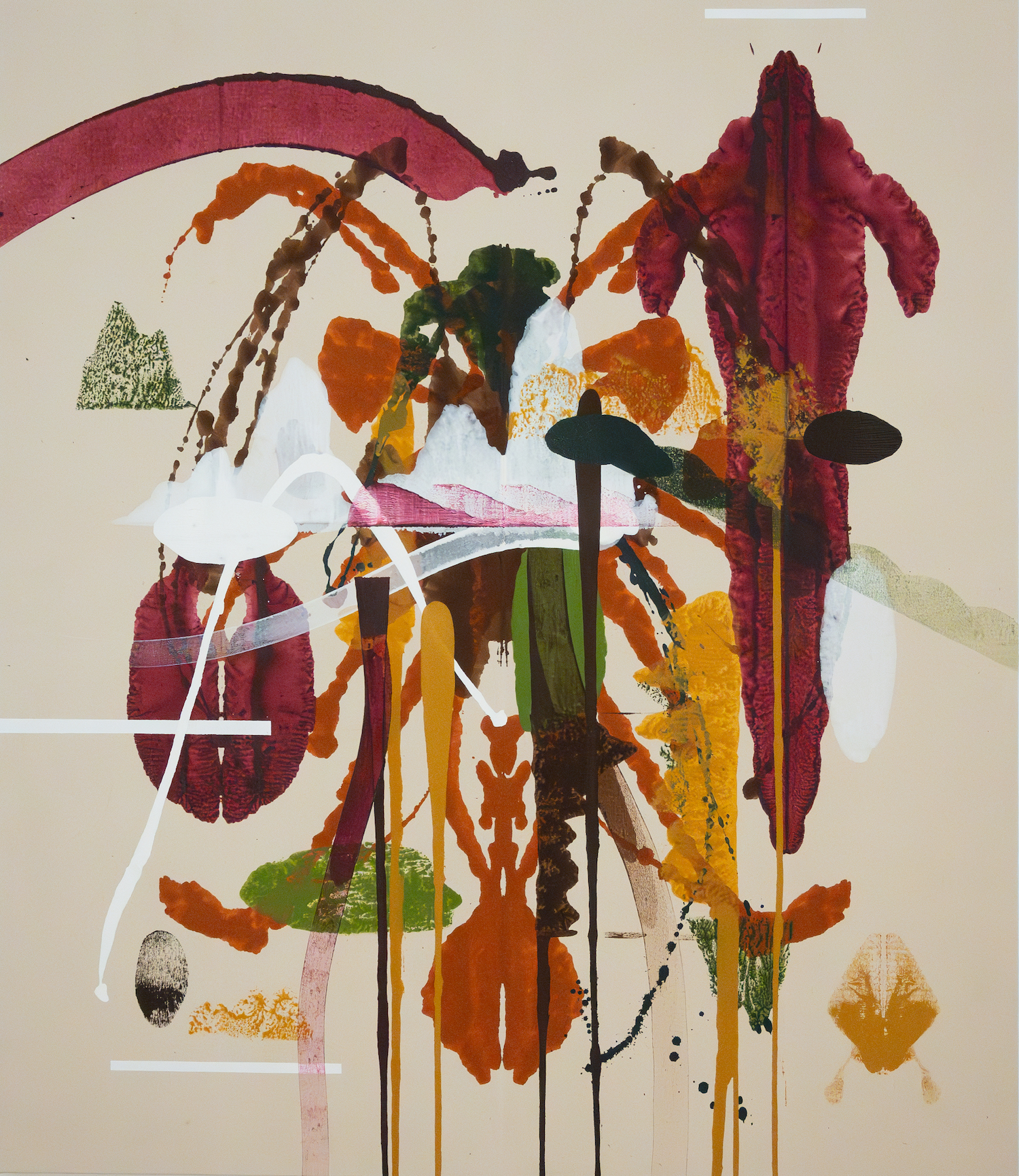

In Right of Frost, Elizabeth Neel transforms gestural abstraction into something simultaneously organic, architectural, andpsychologically unstable. Cascading stains, looping arcs, scraped marks, and suspended forms collide across the canvas likefragments of landscape, anatomy, and weather systems compressed into a single image. The painting feels improvised at firstencounter, yet its structure is tightly orchestrated beneath the surface, balancing fluid movement against moments of abruptinterruption and restraint.
Neel belongs to a generation of painters reexamining the emotional and physical possibilities of abstraction after decades ofconceptual distance. Her work draws clear energy from de Kooning, Joan Mitchell, and Helen Frankenthaler, particularly in itstension between gesture and atmosphere, but it avoids direct nostalgia. Instead, she introduces a sharper sense of fragmentation,instability, and psychological compression shaped by contemporary visual culture and ecological anxiety.
Right of Frost oscillates between growth and collapse. Organic forms appear to bloom, drip, erode, and regenerate simultaneously.The work represents how the language of postwar abstraction continues to evolve—not as heroic mythology, but as a livingsystem capable of absorbing uncertainty, memory, landscape, and emotional volatility into contemporary painting.
Neel belongs to a younger generation of painters connected to the ongoing East End painting culture that evolved out of theNew York School legacy.

