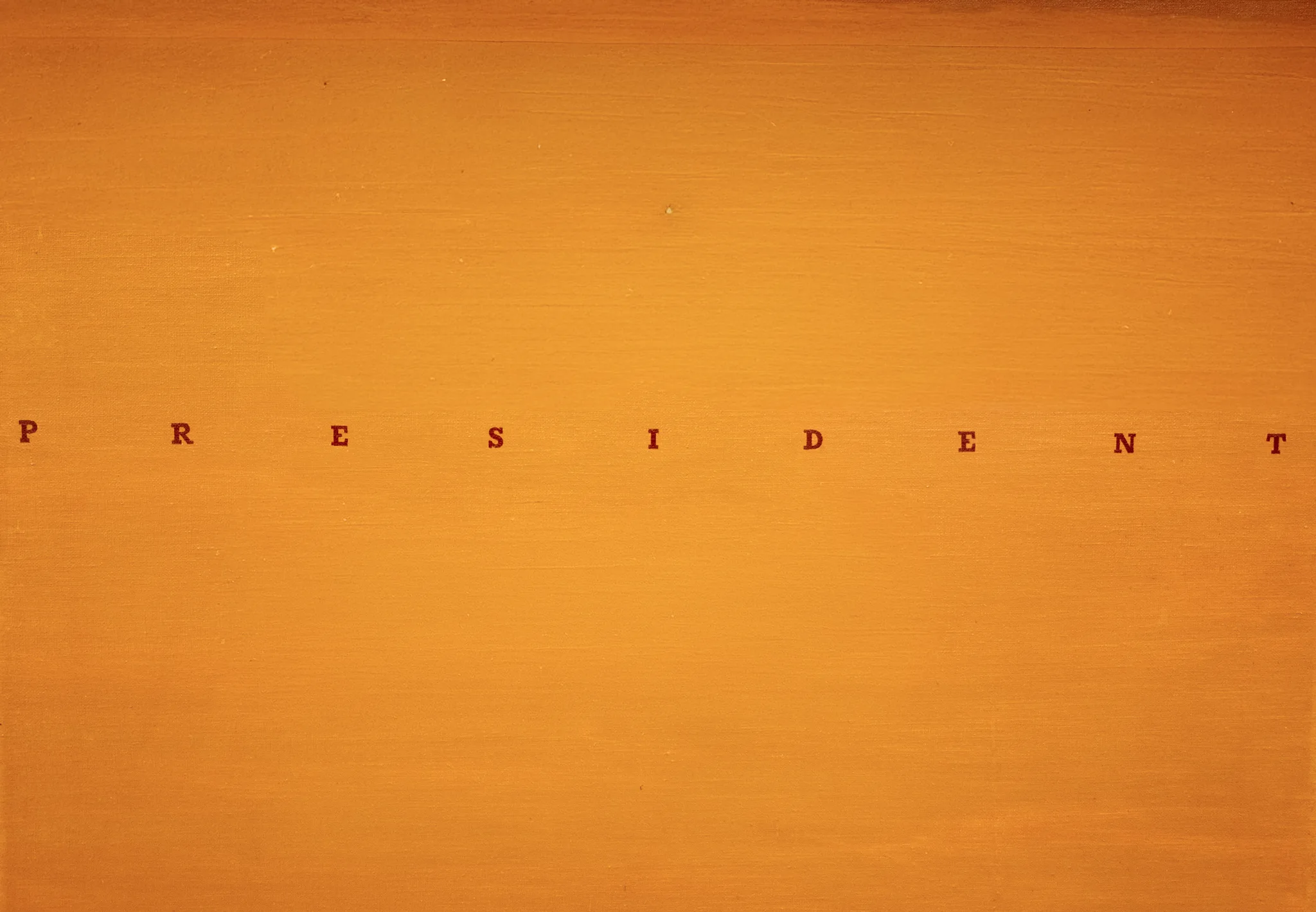
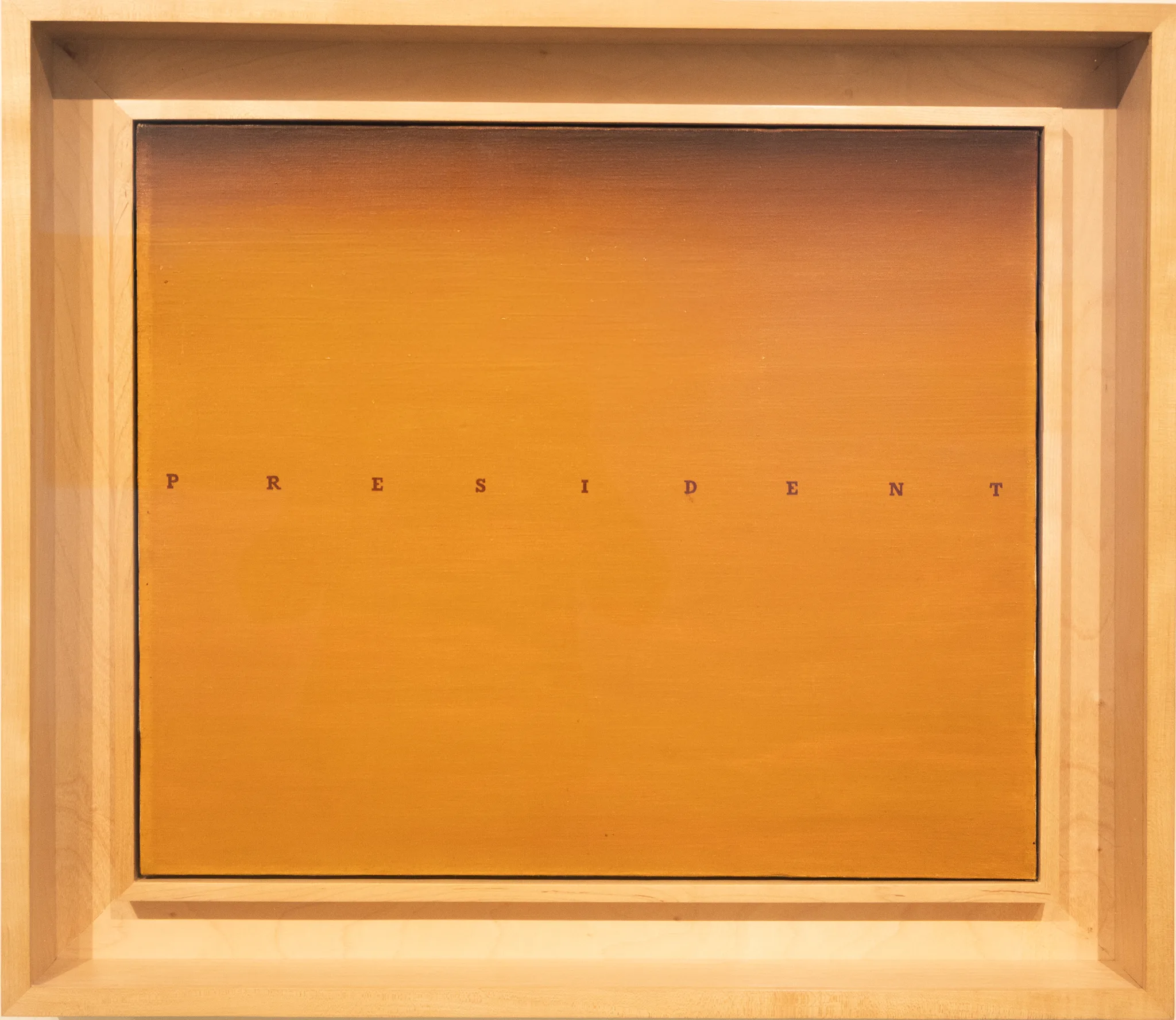
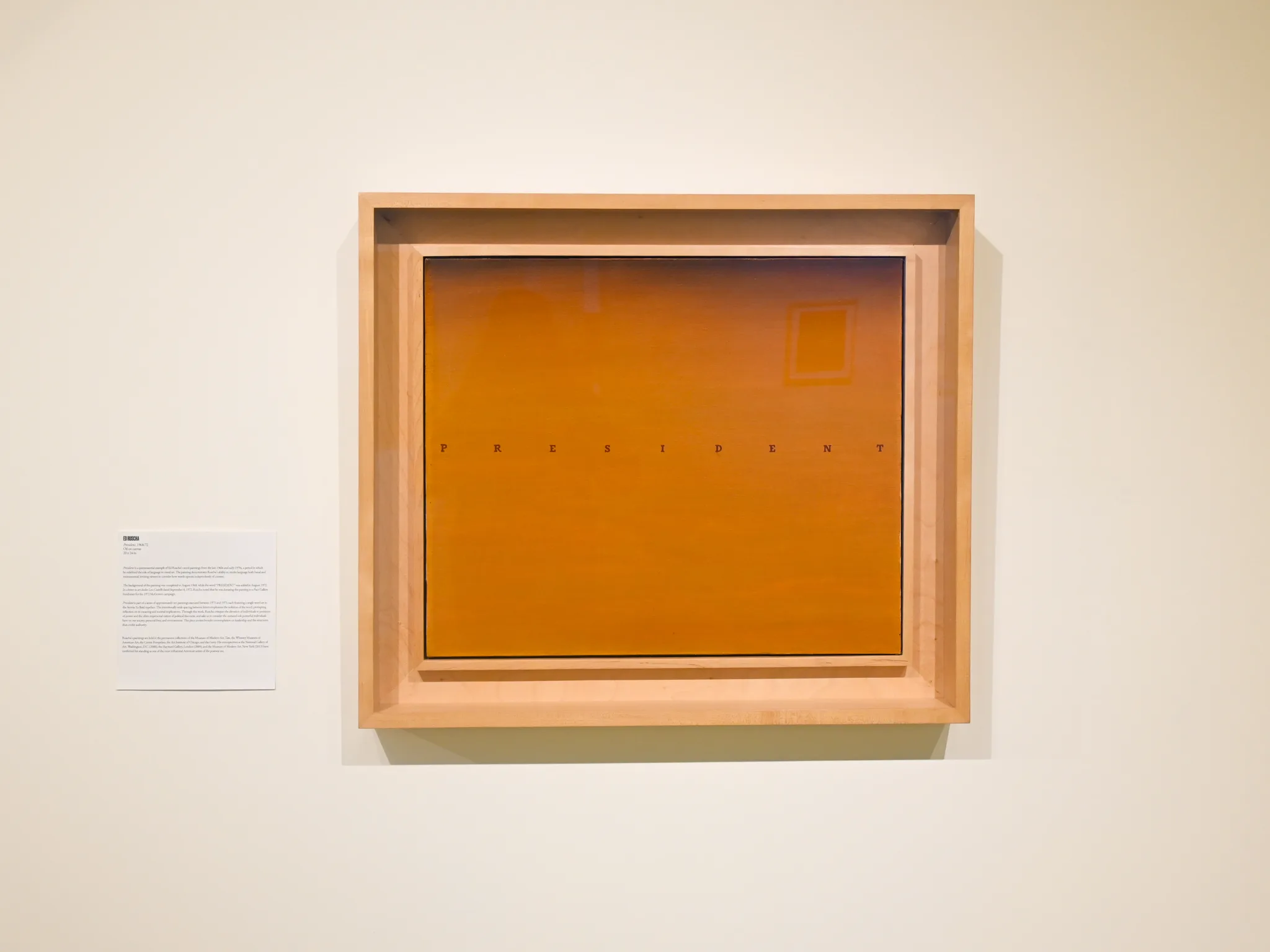
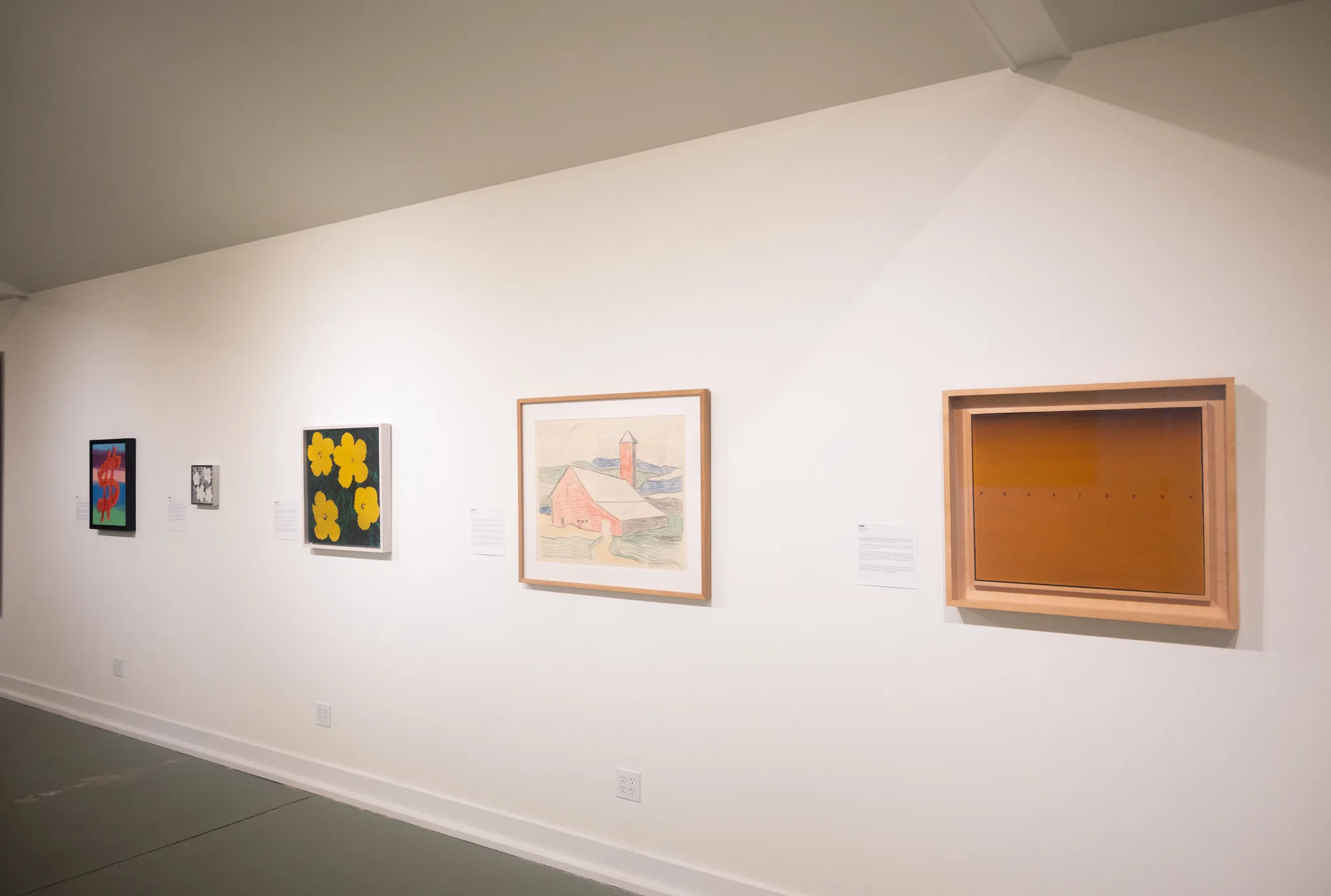

President is a quintessential example of Ed Ruscha’s word paintings from the late 1960s and early 1970s, a period in which he redefined the role of language in visual art.
The painting demonstrates Ruscha’s ability to render language both banal and monumental, inviting viewers to consider how words operate independently of context. The background of the painting was completed in August 1968, while the word “PRESIDENT” was added in August 1972. In a letter to art dealer Leo Castelli dated September 8, 1972, Ruscha noted that he was donating the painting to a Pace Gallery fundraiser for the 1972 McGovern campaign.
President is part of a series of approximately ten paintings executed between 1971 and 1973, each featuring a single word set in the Stymie Ex Bold typeface. The intentionally wide spacing between letters emphasizes the isolation of the word, prompting reflection on its meaning and societal implications. Through this work, Ruscha critiques the elevation of individuals to positions of power and the often impersonal nature of political discourse, inviting contemplation on leadership and the structures that confer authority.
Ruscha’s paintings are held in the permanent collections of the Museum of Modern Art, Tate, the Whitney Museum of American Art, the Centre Pompidou, the Art Institute of Chicago, and the Getty. His retrospectives at the National Gallery of Art, Washington, D.C. (2000), the Hayward Gallery, London (2009), and the Museum of Modern Art, New York (2013) have confirmed his standing as one of the most influential American artists of the postwar era.