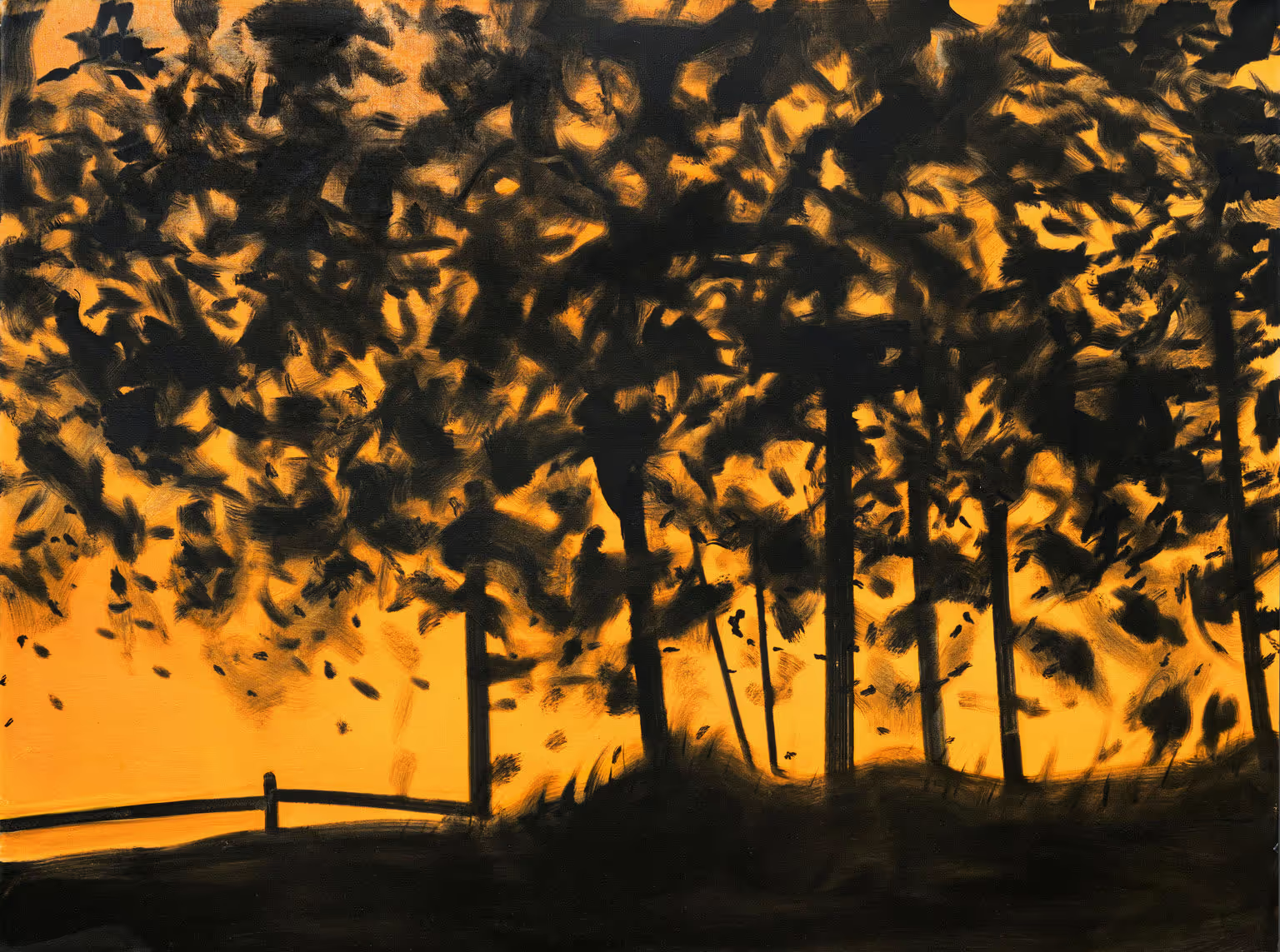


Orange and Black (2006) exemplifies the refined grace of Katz’s mature production. The painting is an exceptional example of a classic Katzian motif: the twilight transition of light viewed through a forested strand of trees. In Katz’s own words, “It’s the instantaneous light. If you get that right then you get in the total present tense – that’s what you are going for, that’s eternity” (Alex Katz, recorded by Emily Steer, Now Showing: Alex Katz Quick Light, Elephant, June 2, 2016). Here, the deep black silhouettes of trees stand in striking contrast to a luminous orange sky, transforming a fleeting moment in nature into an enduring visual icon.
A recurring motif in Katz’s practice since his first residency in Maine in 1949, landscapes such as Orange and Black embody his ability to fuse direct observation with formal elegance.