
We are pleased to have placed this work in the permanent collection of the Detroit Institute of Arts.
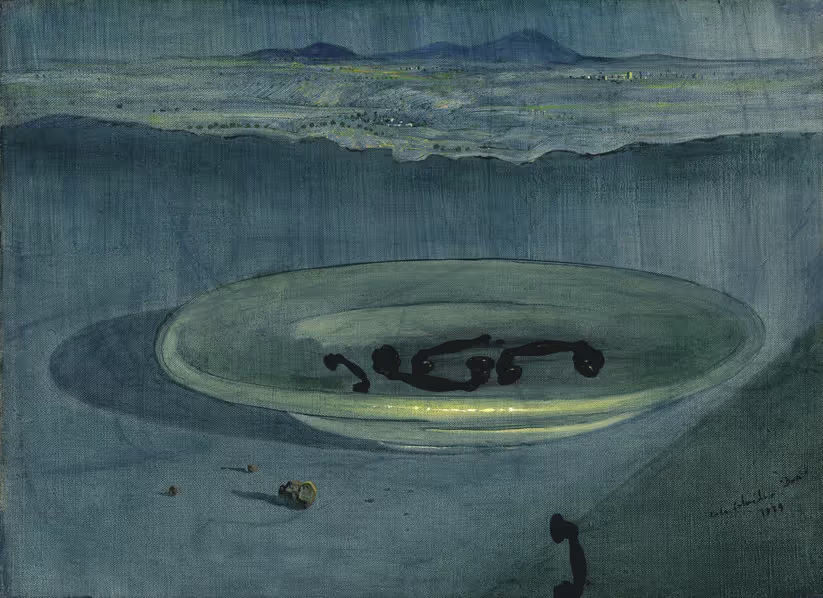
Landscape with Telephones on a Plate belongs to one of Salvador Dalí’s most psychologically charged series, painted in the winter of 1938–1939, in which black telephone receivers appear suspended over or resting upon plates set against the barren landscape of the Ampurdán region of Catalonia, where Dalí was born. These works emerged from a sequence of disturbing dreams Dalí experienced in the wake of the Munich crisis and the terrifying geopolitical atmosphere preceding World War II.
In these paintings, the telephone becomes an emblem of broken communication and political dread. The motif alludes directly to British Prime Minister Neville Chamberlain’s repeated telephone exchanges with Adolf Hitler over the future of Czechoslovakia in the tense weeks leading up to the Munich Agreement of September 29, 1938. For Dalí, however, the telephone was not only a political symbol but also a pre-existing Surrealist fetish object—he had already transformed a telephone into the Lobster Telephone (1936), one of the most iconic objects of the movement. Across this series, Dalí repeatedly links telephones, plates, and dried sardines, creating a macabre but humorous chain of associations that merge communication, consumption, and catastrophe. The result is a group of eerie, grey-toned landscapes that convey a pervasive sense of foreboding.
This painting also carries distinguished provenance. It was originally part of the celebrated collection of Edward James, the eccentric British poet, patron, and one of Dalí’s closest collaborators. James was among the earliest and most important champions of Surrealism in Britain, counting Marcel Duchamp, Pablo Picasso, and Leonora Carrington as friends. His relationship with Dalí was particularly deep: after meeting in 1935, James became a crucial financial supporter, purchasing the entirety of Dalí’s artistic output from 1937 to 1938 under contract. More than a patron, he was a creative partner—helping bring works such as the Mae West Lips Sofa and Lobster Telephone into existence. By 1939, James had amassed a collection of more than 180 works by Dalí, making his holdings the most significant private Surrealist collection in the world at that time.