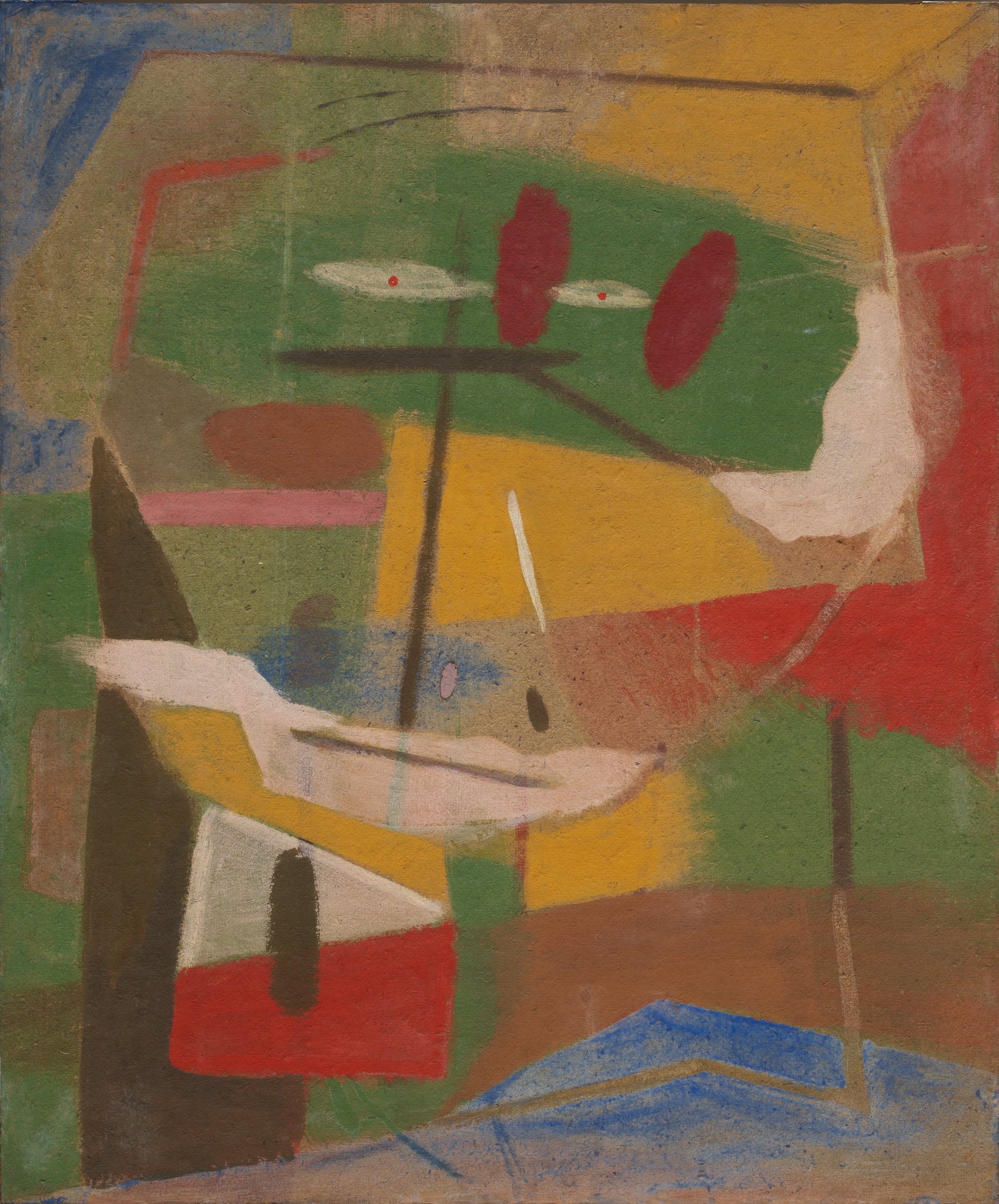

Painted in 1947, Head captures James Brooks at the precise moment when American painting was shifting from Surrealist influence toward the emergence of Abstract Expressionism. Unlike the fully gestural abstraction that would soon define the New York School, this work still retains fragments of figuration. The result feels psychological, unstable, and transitional, as though the image is dissolving in real time.
Brooks was among the earliest artists to absorb European modernism and transform it into a distinctly American visual language. Influenced by Miró, Matta, and wartime Surrealism, his paintings from the late 1940s helped bridge automatism and abstraction before Pollock’s drip paintings fully reshaped the movement. What makes Head intriguing is this tension between image and collapse: the figure remains visible, yet abstraction is overtaking it from within. Head represents the fragile threshold before Abstract Expressionism became mythology. It reflects a moment when postwar artists were still inventing the language of modern American painting—uncertain whether the figure would survive inside abstraction at all.
After Pollock and Krasner moved to Springs in 1945, Brooks and Charlotte Park lived in their former East 8th Street apartment before later following them to the East End, becoming part of the Hampton’s artist colony.

Thank you! Your submission has been received!
Oops! Something went wrong while submitting the form.

