
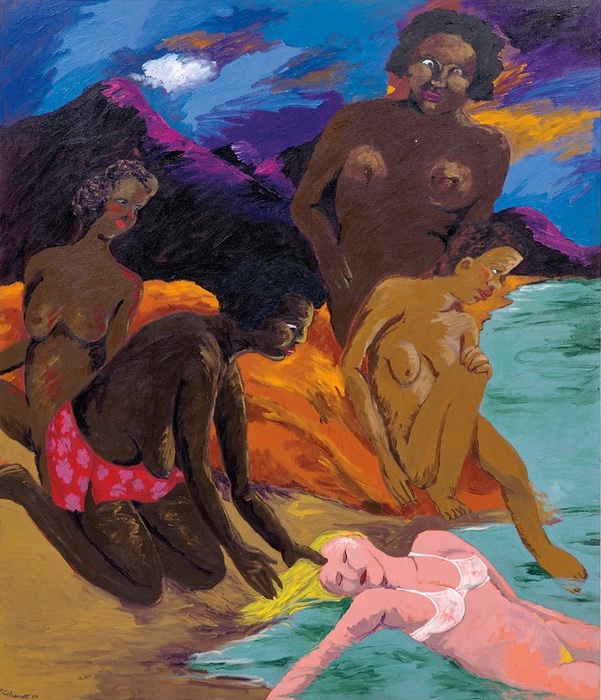

In Gift of the Sea, Robert Colescott reworks the language of Western painting through satire, distortion, and confrontation.Borrowing from classical compositions, Colescott replaces idealized bodies with exaggerated, expressive figures that challengehow race, desire, and power have historically been represented. The scene is deliberately unstable—sensual, chaotic, anduneasy—forcing the viewer to confront both the seduction and violence embedded in art history.
Working well before the broader institutional embrace of Black figuration, Colescott occupies a foundational position,opening space for later generations by directly interrogating the canon itself. His influence has become increasingly visible incontemporary painting, where appropriation and revision are central strategies.
Unlike The Lost Generation, Colescott attacks the structure that precedes it—dismantling inherited visual systems rather than rebuilding from their aftermath.

