
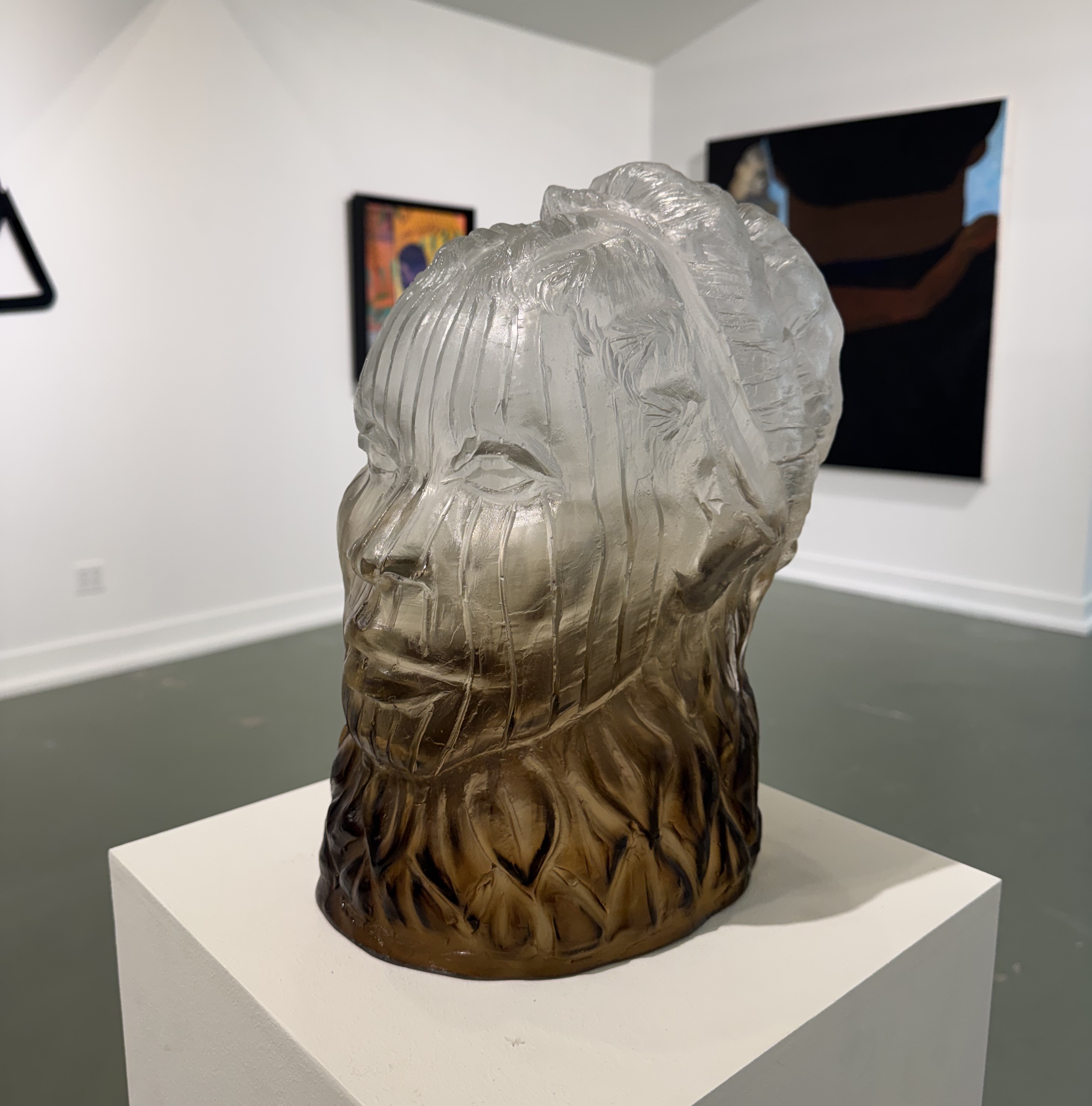

In Dawn, Layo Bright distills the human figure into a quiet, sculptural presence, using glass to explore fragility, opacity, andtransformation. The head—partially translucent, partially grounded—suggests a movement between states: emergence anddissolution, visibility and obscurity. Light becomes an active material, shifting the work’s appearance depending on angle andenvironment, reinforcing a sense of impermanence and psychological depth.
Bright’s practice engages identity through material and process, aligning with a broader contemporary interest in how form canhold memory, ancestry, and interior experience without direct representation. The work resonates with a wider cultural turntoward minimal, symbolic figuration—where presence is implied rather than declared.
Dawn occupies a moment just after rupture; suggesting re-formation. The figure is not fully defined, but becoming: suspendedbetween disappearance and arrival.

