
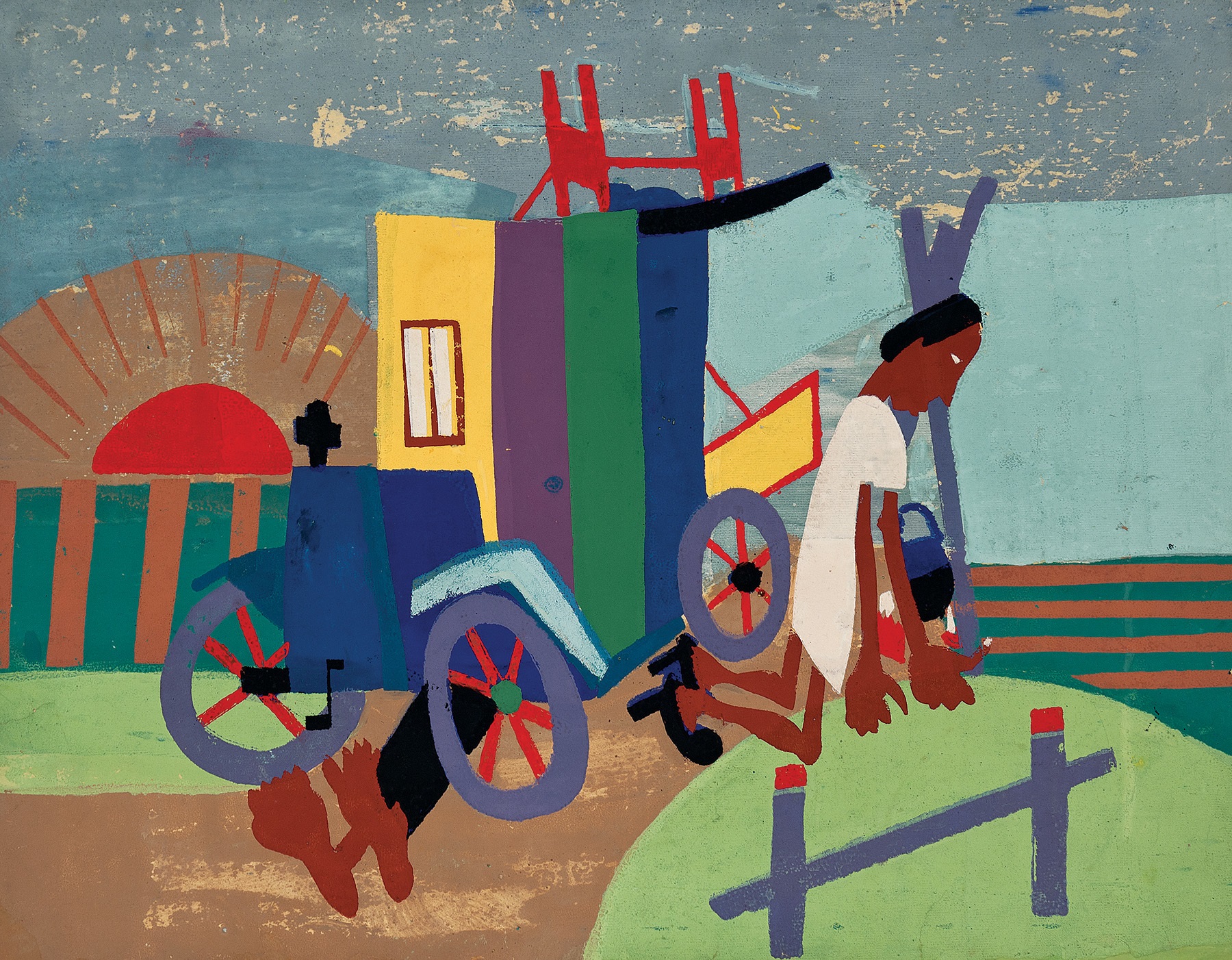

In Breakdown, William H. Johnson distills the visual language of the Harlem Renaissance into a bold, flattened composition ofcolor and form. The simplified figures and stylized setting—rendered through vivid, unmodulated hues—transform everydayBlack life into something rhythmic, symbolic, and enduring. The work reflects Johnson’s shift toward a more direct, accessiblevisual vocabulary, where narrative and clarity take precedence over illusion.
Created during a pivotal moment in American cultural history, this image aligns with a broader effort to define and circulateBlack identity through art, print, and public imagery. Johnson’s work moved beyond the gallery, engaging a wider audience andcontributing to the visual culture of the period in ways that resonate with later intersections of art, design, and mass media.
Johnson constructs a language of presence, community, and continuity that later generations would expand and redefine.

