



%20copy.avif)
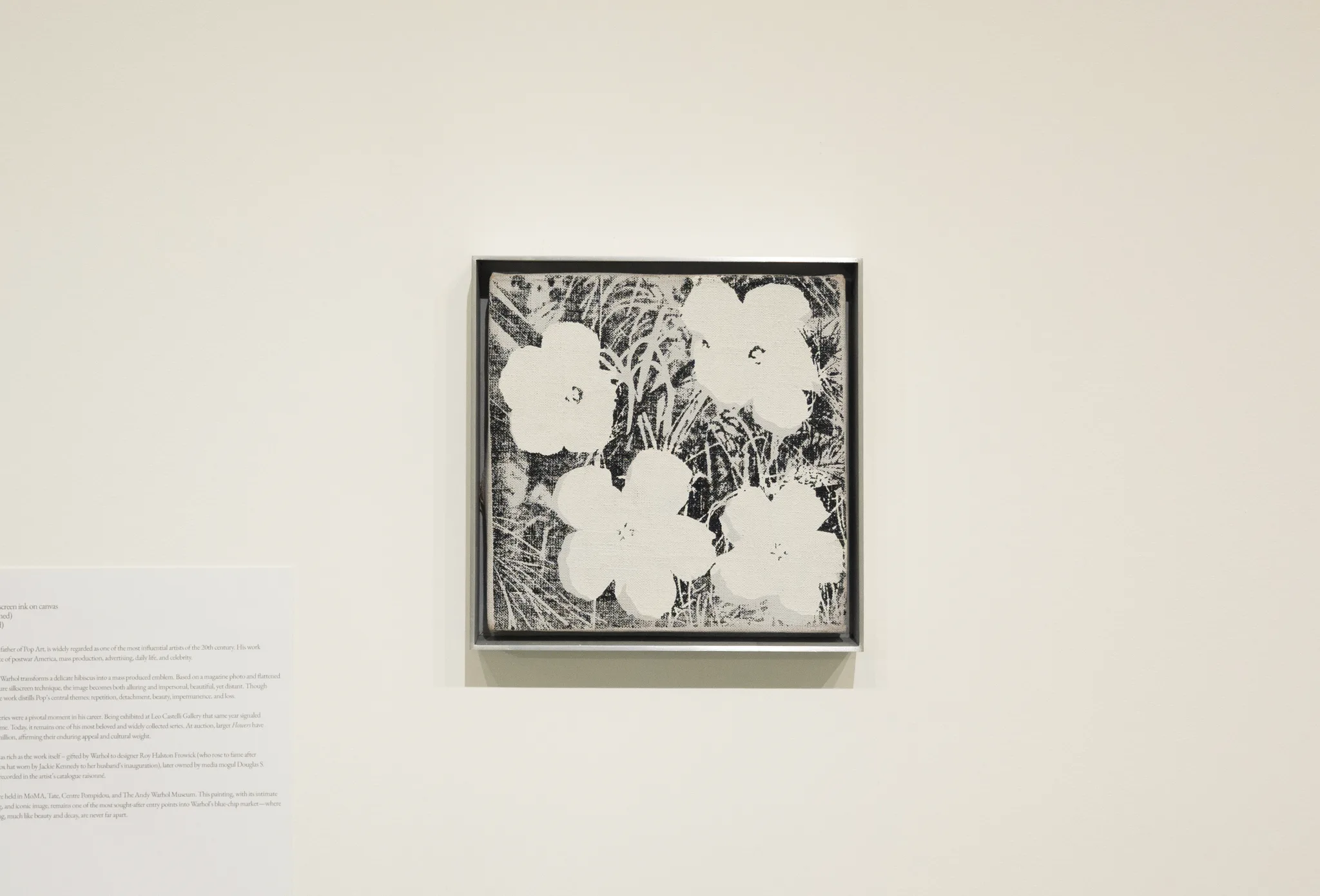
In Flowers (1964), Warhol transforms a delicate hibiscus into a mass produced emblem. Based on a magazine photo and flattened through his signature silkscreen technique, the image becomes both alluring and impersonal, beautiful, yet distant. Though modest in scale, the work distills Pop’s central themes: repetition, detachment, beauty, impermanence, and loss.
Warhol's Flowers series was a pivotal moment in his career. Being exhibited at Leo Castelli Gallery that same year signaled Warhol’s way to fame. Today, it remains one of his most beloved and widely collected series. At auction, larger Flowers have reached over $15 million, affirming their enduring appeal and cultural weight.
The provenance is as rich as the work itself – gifted by Warhol to designer Roy Halston Frowick (who rose to fame after designing the pillbox hat worn by Jackie Kennedy to her husband’s inauguration), later owned by media mogul Douglas S. Cramer, and now recorded in the artist’s catalogue raisonné.