

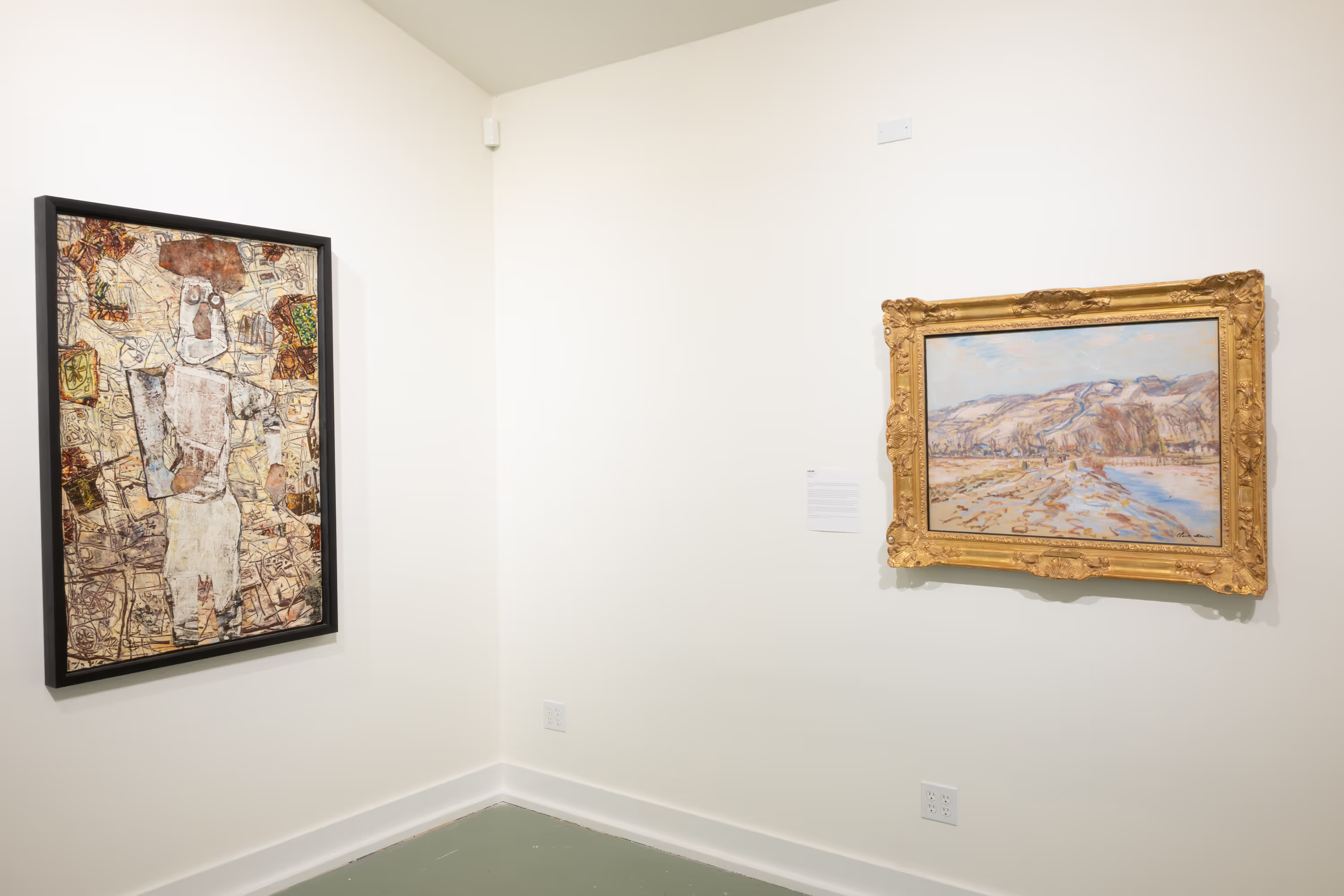
Claude Monet made painting into a way of seeing: not a finished story, but a record of light changing in real time. His ethos was disciplined obsession, returning to the same motif again and again (haystacks, poplars, Rouen Cathedral, the Thames) to show that reality isn’t fixed; it flickers with atmosphere, season, and time of day. As a central figure of Impressionism, he helped shift art history away from academic narrative and toward direct perception, brushwork that stays visible, color that replaces black, and a surface built from sensations.
Monet’s late work, especially the vast Water Lilies cycle, pushed Impressionism toward something almost immersive and proto-abstract, painting as environment, not just image. Major holdings anchor museums worldwide, including the Musée de l’Orangerie (Paris), Musée Marmottan Monet (Paris), Musée d’Orsay (Paris), the Metropolitan Museum of Art (New York), the National Gallery (London), and the Art Institute of Chicago, among many others. His legacy is the modern eye: a conviction that beauty and truth can be found not in grand subjects, but in the shifting conditions of the everyday.


.avif)